5901 Botham Jean Blvd, Dallas, TX 75215
Bare Bright Copper Prices in Texas: Everything You Need to Know
January 15, 2026Bare bright copper prices in Texas typically range from $4.00 to $5.10 per pound in early 2026, solidifying its status as the premier non-ferrous metal in the scrap recycling market. This value represents a significant premium over lower grades, reflecting the critical role high-purity copper plays in global electrification and green energy infrastructure.
The #1 Bare Bright Wire category represents the “gold standard” of copper scrap. It commands the highest rates because it requires minimal secondary refining before it can be reintroduced into the manufacturing stream. Professional Texas recycling centers evaluate copper based on strict criteria, including wire thickness, the total absence of insulation and overall surface luster. While metropolitan areas like Dallas, Fort Worth and Houston often serve as the primary hubs for competitive industrial rates, regional facilities throughout the state provide essential access points for high-volume material recovery.
Market conditions in 2026 continue to be influenced by a structural supply-demand imbalance. Global demand from AI data centers, renewable energy projects and commodity exchange fluctuations all affect the daily pricing of bare bright copper. Understanding these dynamics is essential for industrial facility managers and electrical contractors looking to maximize their returns when liquidating copper assets.
How Bare Bright Copper Prices Compare Across Texas Facilities
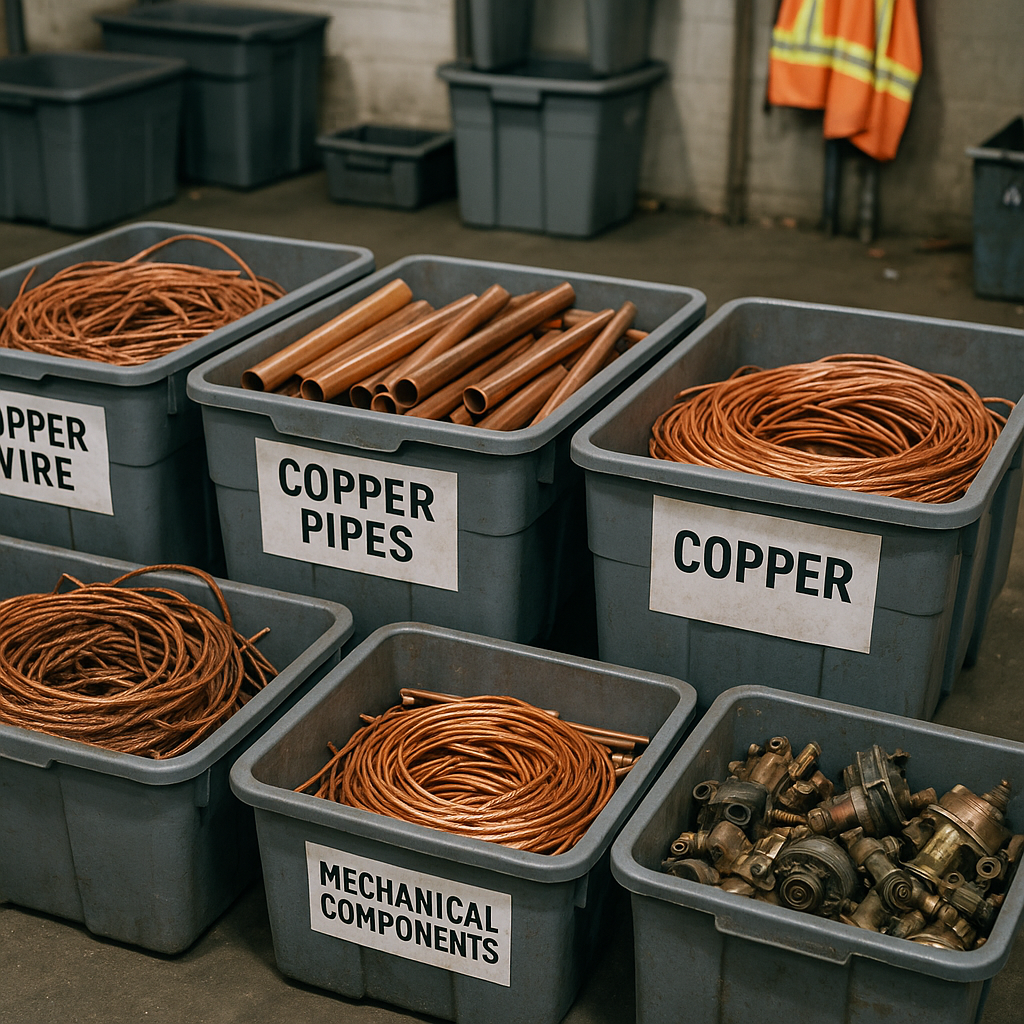
Bare bright copper prices can vary between facilities due to differences in logistics, processing capacity and local industrial demand. In a large state like Texas, the “spread” between different regions can be several cents per pound, which translates to thousands of dollars for high-volume industrial loads.
Statewide data indicates that premium facilities often match or exceed national benchmarks, which are currently hovering near $5.00 per pound for verified high-purity wire. Several factors contribute to these regional price variations. Processing volumes are a major driver; facilities that handle massive industrial tonnage often secure better pricing from domestic smelters and refineries, allowing them to pass those higher rates on to their clients.
Operational efficiency also impacts a facility’s ability to pay top dollar. Advanced recycling centers utilize X-Ray Fluorescence (XRF) analyzers to verify material purity instantly. This scientific verification removes the guesswork from grading, allowing the facility to offer a guaranteed premium rate for verified bare bright copper that meets 99.9 percent purity standards.
| Texas Region | Industrial Grade | Estimated Price Range (Per Lb) |
|---|---|---|
| North Texas (DFW) | #1 Bare Bright | $4.85 – $5.10 |
| Gulf Coast (Houston) | #1 Bare Bright | $4.80 – $5.05 |
| Central Texas (Austin/SA) | #1 Bare Bright | $4.75 – $4.95 |
| East/West Texas | #1 Bare Bright | $4.50 – $4.80 |
Market timing also creates fluctuations between facilities. While some yards might only adjust their board prices once a week, professional industrial recyclers typically utilize real-time pricing systems linked to the London Metal Exchange (LME) or COMEX. This ensures that sellers receive a price that accurately reflects the global value of the metal at the exact moment of the transaction.
Industrial Grading Standards: Identifying #1 Bare Bright Wire
To receive the highest possible payout, your material must meet the strict industry definitions for #1 Bare Bright Copper. Misclassifying your material or failing to prepare it correctly can result in it being downgraded to #1 or #2 copper, which carries a lower price point.
Physical Characteristics of Bare Bright
To qualify as bare bright, the copper must be uncoated and unalloyed. This means it cannot have any tin plating, nickel coating or remains of lead solder. Metallurgically, it should be no thinner than 16-gauge (about the thickness of a pencil lead). Stranded wire is common, but each individual strand must meet the gauge and purity requirements. The wire must be “bright and shiny,” meaning it should not have the green patina of oxidation or the dull brown of heavy weathering.
Proper Stripping and Preparation
Mechanical stripping is the only acceptable way to reach the bare bright grade. Burning the insulation off wire is strictly prohibited by environmental regulations and will actually downgrade the copper to #2 grade because the heat creates carbon residue and oxidation on the surface. Industrial facilities generating large volumes of wire often utilize automated wire-stripping machines or granulators to ensure a high-speed, clean recovery that preserves the copper’s premium luster.
The 2026 Market Drivers: Why Copper Demand Is Surging
In 2026, copper has become a “strategic mineral” due to its indispensability in the global energy transition. This shift has fundamentally changed how scrap copper is valued compared to historical averages.
The Impact of AI and Data Centers
A major new driver for copper demand in 2026 is the expansion of artificial intelligence infrastructure. Modern AI data centers require massive amounts of high-purity copper for power distribution, bus bars and heat-dissipation systems. These facilities use significantly more copper than traditional cloud storage centers, putting a strain on primary mining supply and making the recovery of bare bright scrap wire a top priority for the manufacturing sector.
Electric Vehicles and Grid Modernization
The transition to electric vehicles (EVs) continues to push copper prices higher. A single EV contains nearly four times as much copper as a traditional internal combustion engine vehicle. Furthermore, the modernization of the Texas power grid—integrating wind and solar farms—requires thousands of miles of new high-voltage transmission lines. Because bare bright copper can be recycled with 100 percent efficiency back into these safety-critical components, its value as a secondary feedstock has never been higher.
What Factors Influence Scrap Copper Prices Daily?
Scrap metal prices are highly volatile and can change multiple times a day. Understanding this volatility helps industrial sellers manage their inventory and time their liquidations for maximum profit.
The “Copper Barometer” and Global Economics
Global economic health is the primary influence. Copper is often called “Dr. Copper” because its price trends can predict economic shifts. When global manufacturing and construction are “bullish,” copper demand—and therefore scrap prices—spike. Conversely, economic cooling can lead to inventory surpluses and lower scale prices.
Currency Exchange and Trade Policies
Since copper is traded primarily in U.S. dollars, currency strength affects international demand. When the dollar is strong, copper becomes more expensive for international buyers in Europe and Asia, which can sometimes temper the price. Geopolitical factors, such as tariffs on refined copper or export restrictions on scrap, can also redirect material flows and cause local price anomalies in the Texas market.
The Costs of Production and Recycling
Transportation and energy costs directly impact recycling economics. Higher fuel prices increase the cost of moving heavy bins of copper from a job site to the processing facility. Furthermore, energy-intensive refining operations become more expensive when electricity costs rise. These operational overheads are factored into the price a recycler can offer at the scale, which is why facilities with on-site processing and efficient logistics typically provide more competitive rates.
Environmental Compliance and Asset Protection
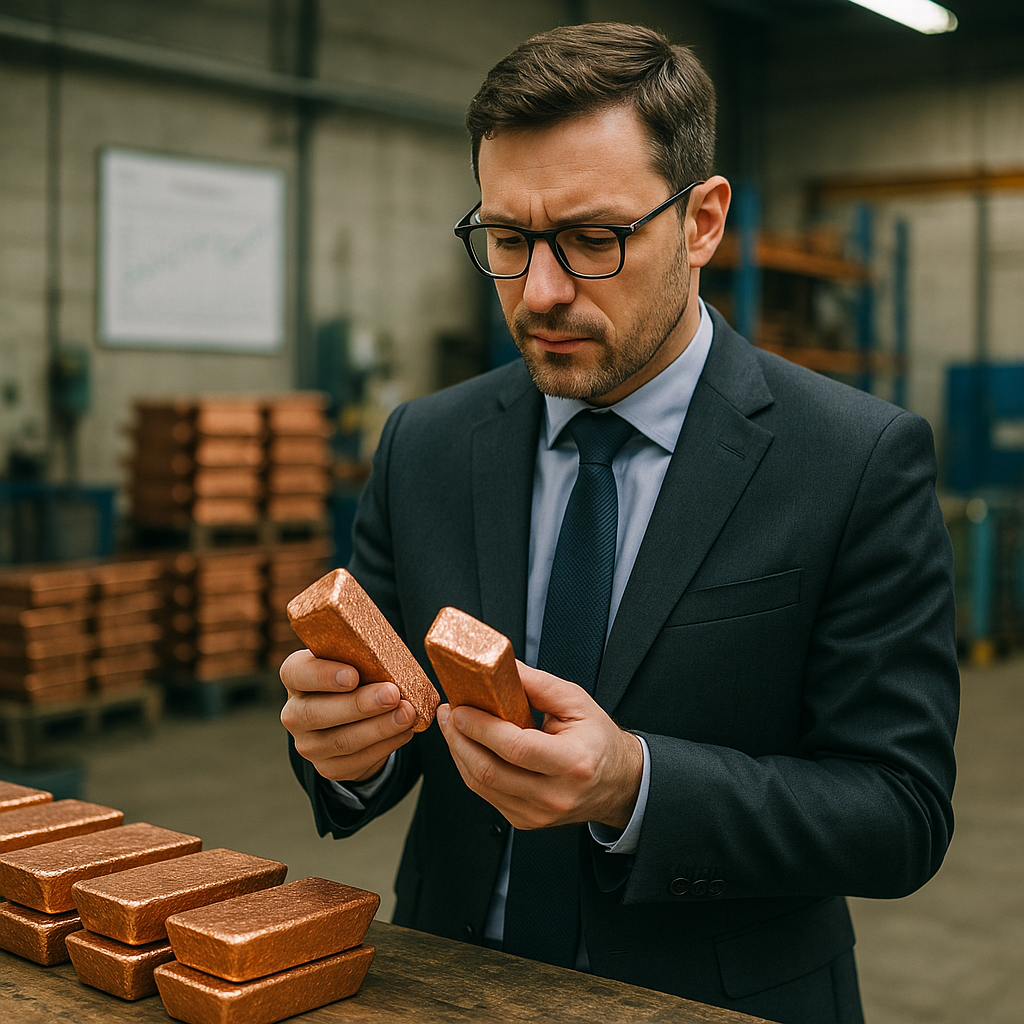
As the value of bare bright copper has increased, so too has the need for strict compliance and security. In Texas, the recycling industry is governed by specific laws designed to protect businesses and prevent the trade of stolen materials.
Texas Metals Program Compliance
Professional recycling entities in Texas must adhere to the Texas Metals Program. This requires sellers to provide a valid government-issued photo ID and, in some cases, proof of ownership for certain regulated materials. For industrial clients, this means that every transaction creates a transparent paper trail, which is essential for corporate auditing and ESG (Environmental, Social and Governance) reporting.
Securing High-Value Inventory
Given that bare bright copper can trade at over $10,000 per ton, it is a target for theft. Facilities generating this scrap should implement secure storage solutions, such as lockable roll-off containers or indoor “cages.” Professional recycling partners can provide secure containers and scheduled pickups to ensure that high-value copper does not sit vulnerable on a construction site or warehouse floor for long periods.
Conclusion
Bare bright copper prices in Texas remain strong in 2026, with current rates between $4.00 and $5.10 per pound depending on the facility, volume and material purity. This non-ferrous scrap metal is a critical asset in the modern circular economy, but maximizing its value requires proper preparation, scientific grading and a deep understanding of global market trends.
For the most accurate and competitive industrial pricing on your bare bright copper materials, we recommend partnering with a facility that offers transparent, real-time pricing and advanced metallurgical testing.
To discuss current market rates and ensure you receive the best value for your industrial scrap, contact Okon Recycling at 214-717-4083.
Send Us a Message
Questions about what we do? Interested in commercial services? Let us know below and a member of our team will get back to you.