5901 Botham Jean Blvd, Dallas, TX 75215
Is Aluminum a Renewable Resource? An Eco Perspective
January 8, 2026No, aluminum is not a renewable resource. It is classified as non-renewable because it is mined from the earth and cannot be replaced within a human lifespan. However, aluminum is highly sustainable because it is infinitely recyclable and can be reused repeatedly without losing its inherent properties. In the industrial sector, this makes it one of the most valuable commodities for waste management and resource recovery programs.
Understanding the distinction between renewable and recyclable is crucial for grasping aluminum’s environmental impact. Renewable resources like wind, solar energy or trees can regenerate naturally within human timescales. Aluminum, extracted from bauxite ore, takes millions of years to form naturally through geological processes. Yet, its material properties make it exceptional among metals as it maintains structural integrity through countless melting and reforming cycles.
This infinite recyclability makes aluminum a cornerstone of the circular economy. Approximately 75 percent of all aluminum ever produced since 1886 remains in active use today. This remarkable retention rate demonstrates how a non-renewable material can become a sustainable resource with proper recycling infrastructure. The ability to recycle aluminum using only 5 percent of the energy required for primary production makes it one of the most environmentally efficient materials in modern manufacturing.
Why Is Aluminum Classified as Non-Renewable?
Aluminum’s classification as a non-renewable resource stems from its origin and the geological processes required to create its source material. The metal comes exclusively from bauxite ore, which forms through extremely slow weathering of rocks in tropical and subtropical regions over millions of years. This extended formation timeline places aluminum firmly in the non-renewable category, despite its abundance in the Earth’s crust.
The extraction process further reinforces aluminum’s non-renewable status. Mining operations remove virgin bauxite ore from finite deposits that cannot regenerate within any meaningful human timeframe. Once these deposits are exhausted, the geological conditions necessary to form new bauxite reserves require millions of years to develop again. This makes bauxite mining an extractive industry that depletes a limited natural heritage.
Energy requirements during primary production highlight another aspect of aluminum’s non-renewable nature. The smelting process and electrolysis needed to convert bauxite into usable aluminum demand substantial electricity. This energy-intensive extraction process, combined with the finite nature of ore deposits, creates a resource consumption rate that far exceeds any natural replenishment timeline. This fundamental difference in replacement time makes aluminum consumption an extractive process that necessitates a focus on materials recovery.
How Recycling Makes Aluminum a Sustainable Material
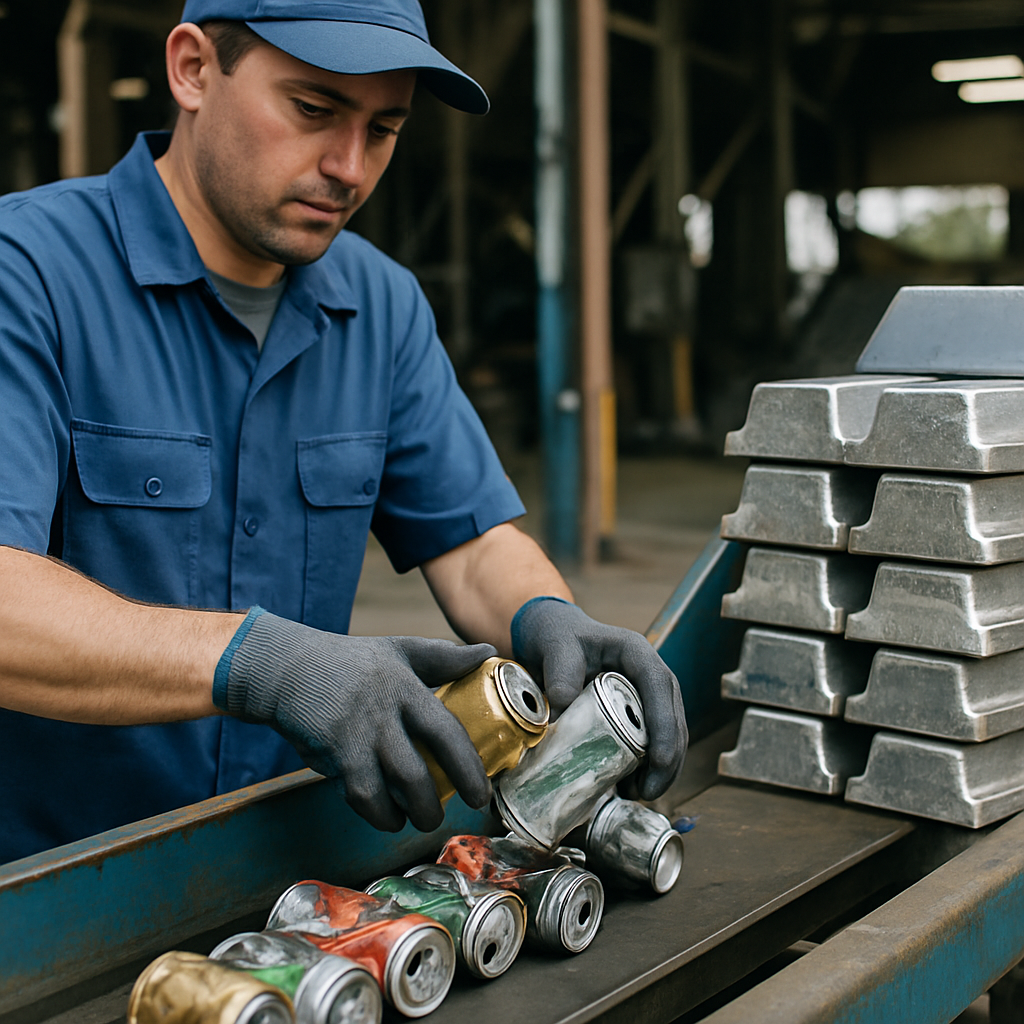
Aluminum’s remarkable recyclability transforms waste management and resource conservation. The metal uses only 5 percent of the energy needed for primary production when processed from recycled materials. This results in energy savings of about 95 percent, making aluminum recycling one of the most efficient resource recovery processes in existence today.
The environmental benefits go beyond energy conservation. Recycling aluminum reduces greenhouse gas emissions by up to 95 percent compared to primary production from bauxite ore. While primary production generates 15.1 tonnes of CO2 equivalent per tonne, recycled aluminum production emits just 0.52 tonnes per tonne, significantly aiding municipalities and businesses in meeting sustainability goals. Industries achieve high recovery rates through end-of-life scrap collection, with the automotive and building sectors maintaining recycling rates above 90 percent.
| Metric | Primary Production (Bauxite) | Recycled Production (Scrap) | Difference/Saving |
|---|---|---|---|
| Energy Required | ~45 kWh per kg | ~2.8 kWh per kg | 95% Saving |
| CO2 Emissions | ~12 kg per kg | ~0.6 kg per kg | 95% Reduction |
| Water Usage | High | 60% Lower | 40% Saving |
| Land Impact | Extensive (Mining) | Minimal (Urban Mining) | Zero Mining Waste |
The Metallurgy of Infinite Recyclability
What makes aluminum unique among industrial materials is its atomic stability. Unlike plastics, which degrade in quality each time they are melted (a process often called “downcycling”), aluminum can be recycled indefinitely without losing its mechanical properties or purity. This section explores why this metal is a permanent resource.
Atomic Structure and Purity Maintenance
Aluminum’s atomic structure remains unchanged during the melting process. In a professional recycling facility, scrap aluminum is melted in a furnace to remove coatings and contaminants. The resulting molten metal is identical to the metal produced from bauxite. This allows high-performance industries, such as aerospace and automotive manufacturing, to use recycled aluminum in safety-critical components without compromising strength or durability.
The Role of Alloys in the Recycling Stream
In industrial settings, aluminum is rarely used in its pure form; it is alloyed with elements like magnesium, silicon or zinc to enhance specific properties. Advanced recycling facilities use X-ray fluorescence (XRF) technology to identify these specific alloys. By precisely sorting scrap by alloy grade—such as 6061 or 7075 series—recyclers can return specific metals to the manufacturing stream with minimal “sweetening” (the addition of virgin metal), maximizing the efficiency of the circular economy.
What Is the Environmental Impact of Primary vs. Recycled Aluminum?
Primary aluminum production demands approximately 45 kWh of energy per kilogram of metal when including electrical generation and transportation fuels. Recycled aluminum, by contrast, requires just 2.8 kWh per kilogram. This significant difference positions recycled materials as essential for sustainable manufacturing practices. The energy embedded in metallic aluminum during initial smelting serves as an “energy bank” accessible indefinitely through recycling.
Manufacturing recycled aluminum emits only 0.6 kg of CO2 per kilogram of metal, while primary production generates 12 kg of CO2. This represents a 95 percent reduction in carbon emissions, with recycling one tonne of aluminum preventing emissions equivalent to driving 40,000 miles. Beyond energy, the recycling process reduces air pollution by 86 percent and water usage by 40 percent compared to primary production.
Primary production requires extracting five tonnes of bauxite ore to produce each tonne of new aluminum. This mining activity generates approximately five tonnes of caustic mud that can contaminate water systems. Recycling eliminates these impacts entirely, preserving natural ecosystems while maintaining the material supply chain. Recycling operations also require only 10 percent of the capital investment needed for primary smelting facilities, enabling smaller industrial footprints and distributed processing networks.
Advanced Sorting Technology in Modern Metal Recovery
To reach high levels of sustainability, industrial recyclers have moved beyond manual sorting. Modern technology ensures that the purity of recycled aluminum remains high enough for reuse in premium products. For businesses and municipalities, this technology ensures they receive the highest possible market value for their scrap.
Eddy Current Separation
One of the most critical tools in a professional recycling facility is the eddy current separator. This machine uses a rapidly rotating magnetic rotor to induce electrical currents in non-ferrous metals like aluminum. These currents create a magnetic field that repels the aluminum, causing it to “jump” away from the waste stream. This allows for high-speed, automated sorting of aluminum from mixed plastic or paper waste with incredible accuracy.
Optical and Laser Sorting
Advanced facilities now utilize optical sorters equipped with high-speed cameras and artificial intelligence. These systems can identify aluminum based on shape, color and even density. Some systems use Laser-Induced Breakdown Spectroscopy (LIBS) to determine the exact alloy of a piece of aluminum in milliseconds. This level of precision is what allows a recycled beverage can to be transformed back into a can within 60 days, or a piece of industrial extrusion to be returned to the building sector as a high-strength structural beam.
The Importance of Source Segregation
While technology is impressive, the highest value in aluminum recycling is achieved through source segregation. When industrial facilities keep their aluminum clips, turnings and solids separate from other metals, they reduce the energy required for secondary processing and ensure their waste becomes a high-grade commodity. Professional scrap management partners help businesses set up these systems to maximize their return on investment while supporting environmental stewardship.
Conclusion: Aluminum’s Vital Role in Sustainability
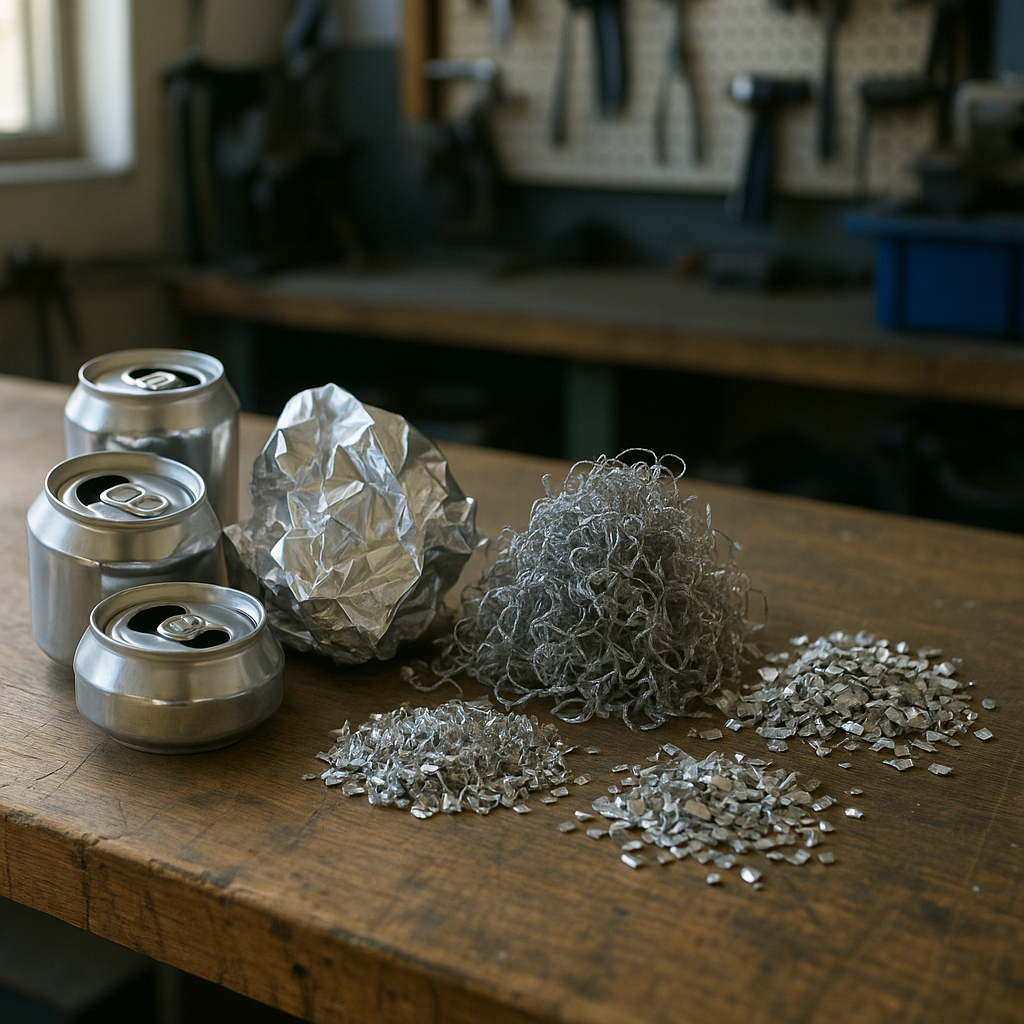
Aluminum exemplifies how materials can drive sustainable practices without compromising performance. Although not renewable, its infinite recyclability without quality loss makes it a cornerstone of the circular economy. The statistics are compelling: 75 percent of all aluminum ever produced remains in active use, and recycling requires 95 percent less energy compared to primary production. These characteristics make aluminum essential for green buildings, sustainable manufacturing and improvements in life cycle assessments across industries.
The future of sustainability relies on materials that can circulate endlessly through our economic systems while maintaining structural integrity and environmental value. Aluminum provides this capability, turning every recycled piece into a permanent building block for tomorrow’s sustainable infrastructure.
For comprehensive aluminum recycling solutions and professional scrap management that support your sustainability goals, contact Okon Recycling at 214-717-4083.
Send Us a Message
Questions about what we do? Interested in commercial services? Let us know below and a member of our team will get back to you.