5901 Botham Jean Blvd, Dallas, TX 75215
From Red Mud to Recycling: The Journey of Natural Aluminum
January 9, 2026Aluminum surrounds us in ways most people never consider. This abundant metal exists not only in the mountains and soil beneath our feet but also in distant stars across the universe and even within our own bodies. Understanding aluminum’s origins helps industrial sectors appreciate why it has become such a critical material in modern recycling operations and high-value materials management.
The primary source of aluminum on Earth is bauxite ore, a mineral containing aluminum compounds mixed with iron oxides and other materials. Bauxite deposits form in tropical and subtropical regions where intense weathering breaks down aluminum-rich rocks over millions of years. These natural sources concentrate in Earth’s crust, making aluminum the second most abundant metal on our planet after iron, and the third most abundant element overall.
Major bauxite deposits span across Australia, Guinea, Brazil and Jamaica, with global production reaching over 41 million tonnes annually. For industrial recycling operations, this global distribution means facilities can process aluminum materials originating from diverse geological formations, each carrying unique characteristics that influence sorting, purity and recovery methods in the secondary market.
What Is the Main Ore for Aluminum Extraction?
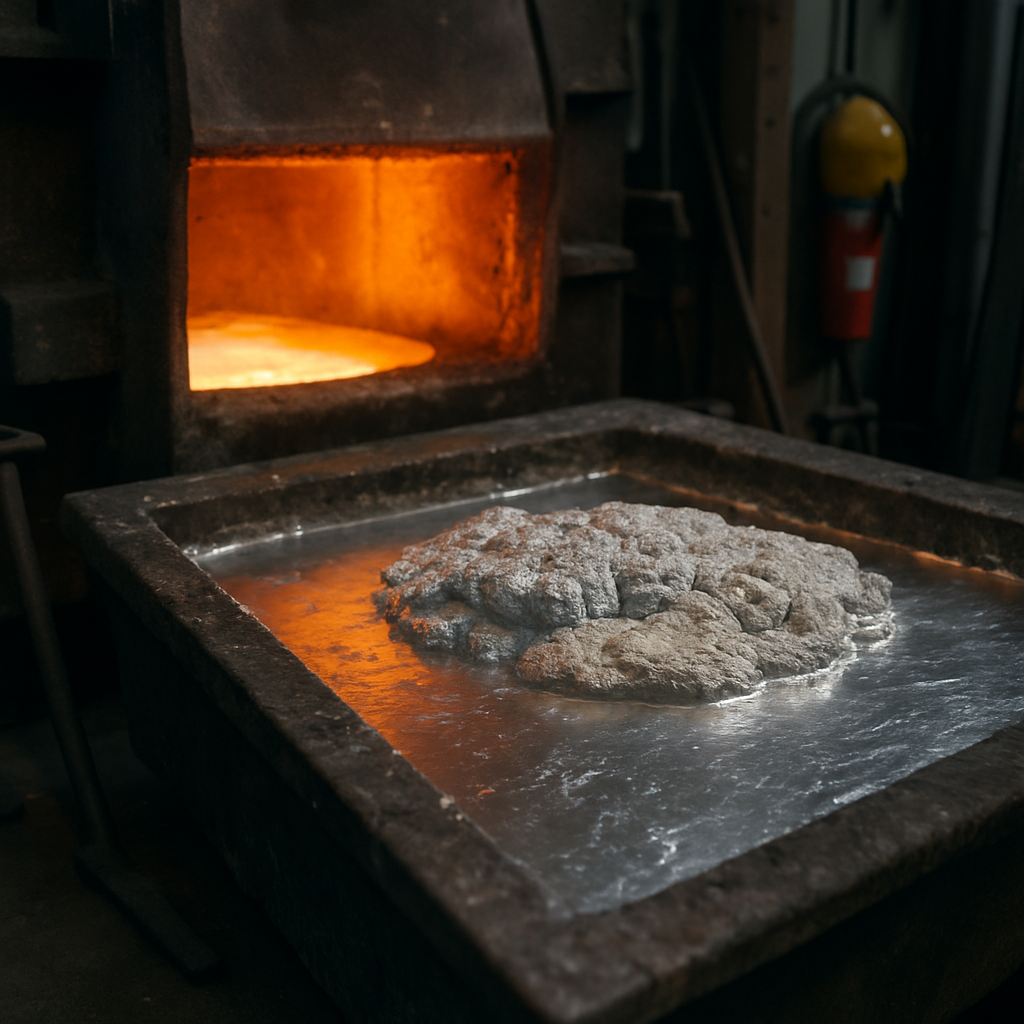
Bauxite is the primary source of aluminum, accounting for approximately 99 percent of all metallic aluminum extracted globally. This reddish-brown ore mainly comprises aluminum oxide compounds mixed with impurities like iron oxides, silicon dioxide and titanium dioxide. Its distinctive rusty color is due to iron oxide, although bauxite can also appear white, tan or gray depending on its specific mineral composition.
The ore contains three key aluminum hydroxide minerals essential for extraction: gibbsite, boehmite and diaspore. These minerals form when silica washes away from aluminum-bearing rocks through weathering in tropical climates. Mining operations use surface strip mining techniques to extract bauxite, removing overburden layers typically four to six meters thick. Most bauxite deposits are near the surface, making open-pit extraction the standard for the industry.
The Energy Intensity of Primary Production
Processing bauxite into aluminum requires about four to five tons of ore to produce two tons of alumina, which ultimately yields one ton of finished aluminum metal. The Bayer process handles the majority of all mined bauxite, converting the raw ore into pure aluminum oxide before electrolytic reduction. This energy-intensive extraction process highlights the immense environmental benefits of industrial recycling programs, as they reduce the need to mine and process new bauxite ore.
While bauxite reserves ensure aluminum availability for decades, the environmental impact of mining and the carbon footprint of smelting increase the value of recovered aluminum for sustainable manufacturing. Recycling aluminum uses only 5 percent of the energy required for primary production, making waste recovery an essential pillar of responsible materials management in 2026.
The Metallurgy of Aluminum Alloys: Identification and Purity
In the industrial recycling sector, the value of aluminum is not just in the weight of the metal, but in the specific chemistry of the alloy. Understanding the different “series” of aluminum helps organizations maximize the return on their scrap materials.
Understanding the Alloy Series
Industrial aluminum is rarely used in its pure form. Instead, it is alloyed with elements like copper, magnesium, silicon and zinc to enhance strength, corrosion resistance or machinability. Common categories include:
- 1000 Series: Essentially pure aluminum (99% or higher), used in chemical equipment and electrical applications.
- 2000 Series: Alloyed with copper; known for high strength and used in aerospace applications.
- 6000 Series: Alloyed with silicon and magnesium; these are the most common extrusions found in construction and automotive frames.
- 7000 Series: Alloyed with zinc; utilized for high-stress aerospace components.
Advanced XRF and LIBS Sorting
To ensure high-purity recycled feedstock, professional recycling facilities utilize advanced technology like X-ray Fluorescence (XRF) and Laser-Induced Breakdown Spectroscopy (LIBS). These handheld and conveyor-integrated devices provide an instant chemical breakdown of the metal. This technology allows recyclers to separate high-value 6061 extrusions from common sheet aluminum, ensuring that industrial manufacturers receive the exact alloy specifications required for their melting furnaces.
The Hall-Héroult Process: Why Aluminum Smelting Is So Energy Intensive
To fully grasp the economic argument for aluminum recycling, it is necessary to understand the physics of primary aluminum production. Unlike iron or copper, which can be refined using heat and carbon in a furnace, aluminum requires a massive amount of electricity to break its chemical bonds.
Electrolysis and Molten Cryolite
The pure alumina (aluminum oxide) produced by the Bayer process is dissolved in a molten bath of cryolite. High-voltage electricity is passed through this bath, which separates the aluminum from the oxygen. This electrolytic process is continuous and consumes enormous amounts of power, which is why primary aluminum smelters are often built near hydroelectric dams or massive power grids. This high “embedded energy” makes every pound of recycled aluminum a significant conservation of electricity.
Carbon Footprint Comparison
The carbon emissions associated with primary smelting are substantial, ranging from 12 to 18 kilograms of CO2 per kilogram of aluminum produced. In contrast, the secondary recovery of aluminum—the process used in recycling—emits only a fraction of that amount. As global corporations move toward “Scope 3” emissions reporting in 2026, the demand for recycled aluminum has skyrocketed because it allows manufacturers to lower the total carbon profile of their final products without sacrificing material performance.
How Widespread Is Aluminum in Nature?

Aluminum ranks as the most abundant metal in the Earth’s crust, comprising 8.1 percent of all crustal material. Despite its prevalence, extracting pure aluminum remains challenging due to its reactivity. Its widespread distribution extends from astronomical bodies to terrestrial environments, forming a complex network of natural sources.
On Earth, aluminum exists in numerous mineral compounds, bonded with oxygen and silicon to form complex silicate structures. The universe also hosts significant aluminum deposits, with concentrations found in the Sun and meteorites, illustrating the metal’s fundamental role in stellar formation. Terrestrial reservoirs include minerals like bauxite and cryolite. These aluminum silicates arise from geological processes over millions of years.
Hydrospheric and Biological Presence
Seawater and freshwater streams carry dissolved aluminum compounds throughout the hydrosphere. These aquatic systems transport aluminum particles over vast distances, redistributing the metal via natural water cycles. Even humans have trace amounts of aluminum, absorbed through food, water and environmental exposure. This ubiquity means that aluminum is a permanent part of our global ecosystem.
| Source Type | Primary Forms | Industrial Role |
|---|---|---|
| Earth’s Crust | Bauxite, Feldspar, Mica | Primary mining reservoir |
| Hydrosphere | Dissolved Al salts | Environmental monitoring |
| Celestial Bodies | Magnesium-Aluminum inclusions | Stellar geology research |
| Biosphere | Trace tissue content | Food and safety compliance |
The widespread presence of aluminum offers both opportunities and challenges for recycling operations. Understanding these distribution patterns highlights why recovering aluminum from waste streams provides substantial benefits. Instead of extracting new aluminum through energy-intensive mining, industrial facilities can capture this plentiful metal from existing products and manufacturing waste, effectively turning the planet’s urban infrastructure into a high-grade “urban mine.”
Conclusion: Aluminum’s Ubiquitous Nature and the Future of Recovery
Aluminum is a fundamental natural resource, making up about 8 percent of Earth’s crust and appearing in various environments. Found in clay minerals, granite formations and sedimentary deposits, this essential element is present throughout terrestrial systems. While bauxite ore remains the primary commercial source, the metal’s applications extend far beyond mining into the aerospace, construction and transportation sectors.
Recognizing aluminum’s abundance highlights both the opportunities and responsibilities within the recycling industry. As we develop sustainable material recovery systems, aluminum’s availability and its infinite recyclability make it the cornerstone of circular economy practices.
For comprehensive aluminum recycling solutions that maximize material recovery and environmental ROI, contact Okon Recycling at 214-717-4083.
Send Us a Message
Questions about what we do? Interested in commercial services? Let us know below and a member of our team will get back to you.