5901 Botham Jean Blvd, Dallas, TX 75215
Is It Worth Stripping Copper Wire for Scrap?
January 9, 2026Copper prices have surged over 40 percent in the past year, creating significant opportunities for industrial recyclers and scrap metal dealers. This dramatic price increase has turned copper wire stripping from a casual maintenance task into a genuinely profitable industrial venture. With bare bright copper commanding premium rates at recycling facilities, the financial incentives for high-volume recovery have never been stronger.
The decision to strip copper wire versus selling it insulated depends on several technical factors. Wire type, copper content and available processing tools all influence the final return on investment.
Stripping insulated wire can upgrade your material to premium grades like #1 Bare Bright copper, which fetches the highest market prices. This grade transformation can increase your returns by up to 50 percent compared to selling common insulated wire.
How Does Stripping Wire Compare to Selling It Insulated?

Deciding whether to strip wire or sell it insulated involves weighing processing time against profit potential. Selling insulated wire provides immediate liquidity without equipment costs, while stripping captures the processing margin that professional scrap yards typically take. Profit differences depend significantly on wire gauge and copper recovery rates.
The Math of Copper Recovery
For a 100-pound load of 12-gauge wire, insulated wire may generate a baseline return. However, stripping that same load yields roughly 75 pounds of clean copper. If the price spread between “insulated” and “bare bright” is wide, the labor or machine time becomes highly profitable. Thin wires like 12-gauge often contain only 75 percent recoverable copper, with the remaining 25 percent as plastic or rubber waste.
Thicker wire alters this calculation dramatically. Heavy-gauge cables, such as 250MCM to 750MCM, often achieve 90 percent recovery rates. For industrial contractors, these high-recovery cables are the primary targets for stripping. Selling insulated wire requires no special equipment, allowing facility managers to load mixed bundles directly onto trucks. However, stripping captures the full market value. Clean #1 bare bright copper is premium-priced because it requires no further refining. Scrap yards can immediately resell stripped copper to mills, bypassing granulating operations. This direct market access explains why stripped copper often doubles in price compared to its insulated counterpart.
Industrial Copper Grading: What Sorters Look For
In the professional recycling world, “copper” is not a single category. To get the highest payout, you must understand the specific grades used by industrial buyers. Misclassifying your stripped wire can lead to lower payouts at the scale.
#1 Bare Bright Copper
This is the “gold standard” of the scrap industry. To qualify, the wire must be uncoated, unalloyed and at least 16-gauge in thickness. It must be completely free of paint, solder, oxidation and, of course, any remaining insulation. In 2026, this material is in high demand for high-performance electrical components and electric vehicle motors.
#1 Copper vs. #2 Copper
Once you strip the insulation, the condition of the metal determines if it is #1 or #2 grade. #1 copper consists of clean, unalloyed bus bars, wire or tubing that is free of attachments. If the copper has heavy oxidation (is green or very dark), paint, solder joints or plating (like tin or nickel), it is downgraded to #2 copper. While still valuable, #2 copper requires more refining, which results in a lower price per pound.
What Are the Best Methods and Tools for the Job?
Selecting the right wire stripping equipment involves considering processing volume, wire gauge compatibility and total cost of ownership. The three main categories of tools cater to various operational scales.
Manual Wire Strippers for Light-Duty Operations
Manual strippers are the most economical option for facilities processing small volumes. These hand-operated tools feature adjustable blades and require no power, making them ideal for field operations. However, the labor-intensive nature of manual stripping significantly limits throughput. These tools are best suited for high-value wire where precision is more important than speed.
Electric Wire Strippers for Medium-Scale Processing
Electric strippers provide automated feed systems and consistent performance. These machines feature built-in motors to eliminate physical strain while maintaining precise control over blade depth. Electric models typically handle wire gauges from 10 to 24 AWG. The total cost of ownership is advantageous when a facility processes 25 pounds or more per month, with payback periods often measured in weeks for active operations.
Advanced Machines for Industrial Operations
Industrial-scale stripping machines are the pinnacle of recovery technology. These units feature automated feed systems, precision laser-guided blade adjustments and high-throughput capabilities. They can process wire diameters up to 3.5 inches and handle volumes impractical for smaller equipment. While the upfront costs can be significant, these machines are essential for facilities processing hundreds of pounds of wire monthly.
| Tool Category | Monthly Volume | Max Wire Diameter | Power Source |
|---|---|---|---|
| Manual Hand Tools | < 50 lbs | 0.5 inches | Manual |
| Electric Portable | 50 – 500 lbs | 1.5 inches | 110V Electric |
| Industrial Automatic | > 500 lbs | 3.5+ inches | 220V/440V Electric |
Advanced Granulation: The High-Volume Industrial Alternative
For large-scale demolition projects or utility upgrades where miles of thin, “hair-sized” wire are generated, stripping individual strands is impossible. In these cases, industrial granulation is the preferred recovery method.
The Granulation Process
An industrial copper granulator works like a high-speed blender for metal. Mixed insulated wire is fed into a hopper where it is shredded into small pieces. These fragments then pass over a vibrating “shaker table” or an air-density separator. Because copper is much heavier than plastic insulation, the metal is separated from the “fluff” with nearly 100 percent accuracy. The resulting product is “copper chops,” which are highly valued by smelters.
When to Granulate vs. Strip
Granulation is the superior choice for thin-gauge wires, such as communications cable, Cat5/Cat6 and automotive harnesses. These wires have a very low recovery rate if stripped individually. However, for thick “500 MCM” building cable, mechanical stripping remains the most profitable method because it maintains the “Bare Bright” classification, which usually fetches a higher price than granulated chops.
What Key Factors Should You Consider When Choosing Equipment?
Wire gauge compatibility is fundamental. Different machines handle specific wire sizes, ranging from thin 26 AWG wires to thick 0 AWG cables. Using equipment not suited for your wire gauge can damage the copper core or lead to jammed blades. Versatile machines that accommodate various diameters offer the best operational flexibility for diverse recycling streams.
Processing volume directly affects equipment choice. High-volume recycling operations require automatic strippers that can process hundreds of feet per minute. Furthermore, industrial environments demand robust construction. Machines made from hardened steel or aircraft-grade aluminum withstand continuous operation better than entry-level alternatives. Always look for equipment with accessible replacement parts to minimize potential downtime.
What Are the Most Important Safety Precautions?
Personal protective equipment is essential. Safety goggles guard against flying metal fragments, and cut-resistant gloves help prevent lacerations from sharp wire edges and blades. Electrical safety is the most critical precaution. Always verify that wires are completely de-energized before starting work. Use a properly rated voltage tester to confirm the absence of current, following the live-dead-live testing procedure.
Turn off power at the main breaker and implement proper lockout/tagout procedures when working on site-integrated electrical systems. Never assume insulation is intact on older wiring. Tool maintenance also impacts safety; inspect blades daily for wear or defects that could cause the wire to “slip” or kick back during the feed process. Finally, maintain a clean workspace to prevent trip hazards around rotating machinery.
The Final Verdict: When Is Stripping Wire Worth the Effort?
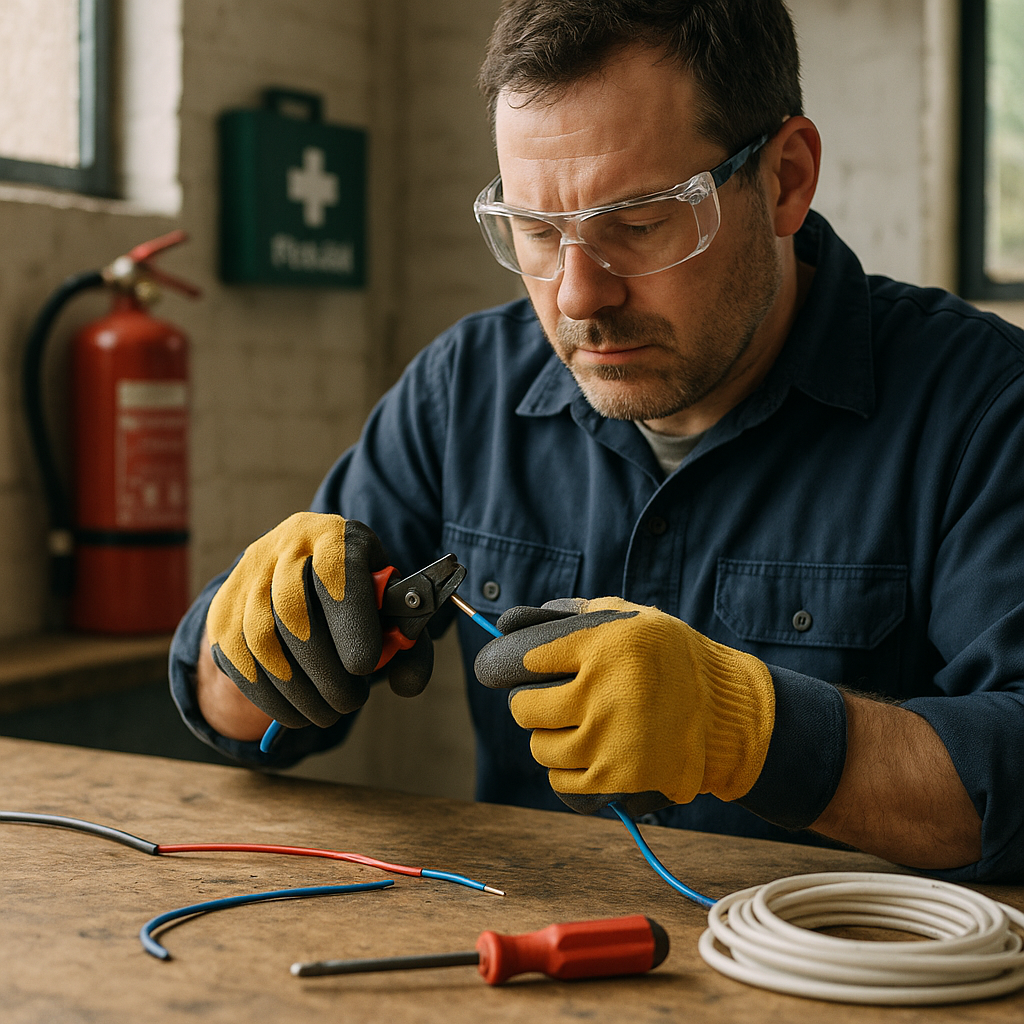
Stripping copper wire is a high-yield opportunity for the industrial sector. The decision depends primarily on volume and the type of material generated. For contractors, electricians and manufacturing facilities regularly handling wire, investing in an automated stripping machine provides clear financial benefits. These machines usually pay for themselves within a few processing cycles, as clean copper commands a significantly higher market price than insulated wire.
Small-scale operations with occasional batches may find selling insulated wire directly more practical. However, as the demand for copper rises in the circular economy, stripping becomes an increasingly attractive strategy for maximizing asset value.
For expert guidance on enhancing your copper recovery strategy and maximizing scrap profits through professional grading, contact Okon Recycling at 214-717-4083.
Send Us a Message
Questions about what we do? Interested in commercial services? Let us know below and a member of our team will get back to you.