5901 Botham Jean Blvd, Dallas, TX 75215
What Is Scrap Metal Recycling? Everything You Need to Know
January 10, 2026Steel is the most recycled material in the world, and understandably so. Unlike many other materials, metals retain their essential properties through countless recycling cycles. This unique characteristic makes scrap metal recycling one of the most effective sustainability practices today. In 2026, as industrial sectors prioritize the circular economy, understanding the mechanics of metal recovery is essential for any organization looking to transform waste into a profit center.
Scrap metal recycling involves collecting, processing and transforming end-of-life products from sources like appliances, vehicles and construction debris into valuable raw materials. The process converts potential waste into resources for manufacturing new products. This circular economy approach reduces our reliance on virgin materials while supporting sustainable waste management across industries.
The benefits go beyond resource conservation. Recycling aluminum saves up to 95 percent of the energy needed for production from primary materials. The recycling industry generates over $105 billion in annual economic activity, creating jobs and reducing environmental impact. Every ton of recycled metal represents immediate economic value and long-term environmental protection.
What Is the Scrap Metal Recycling Process?
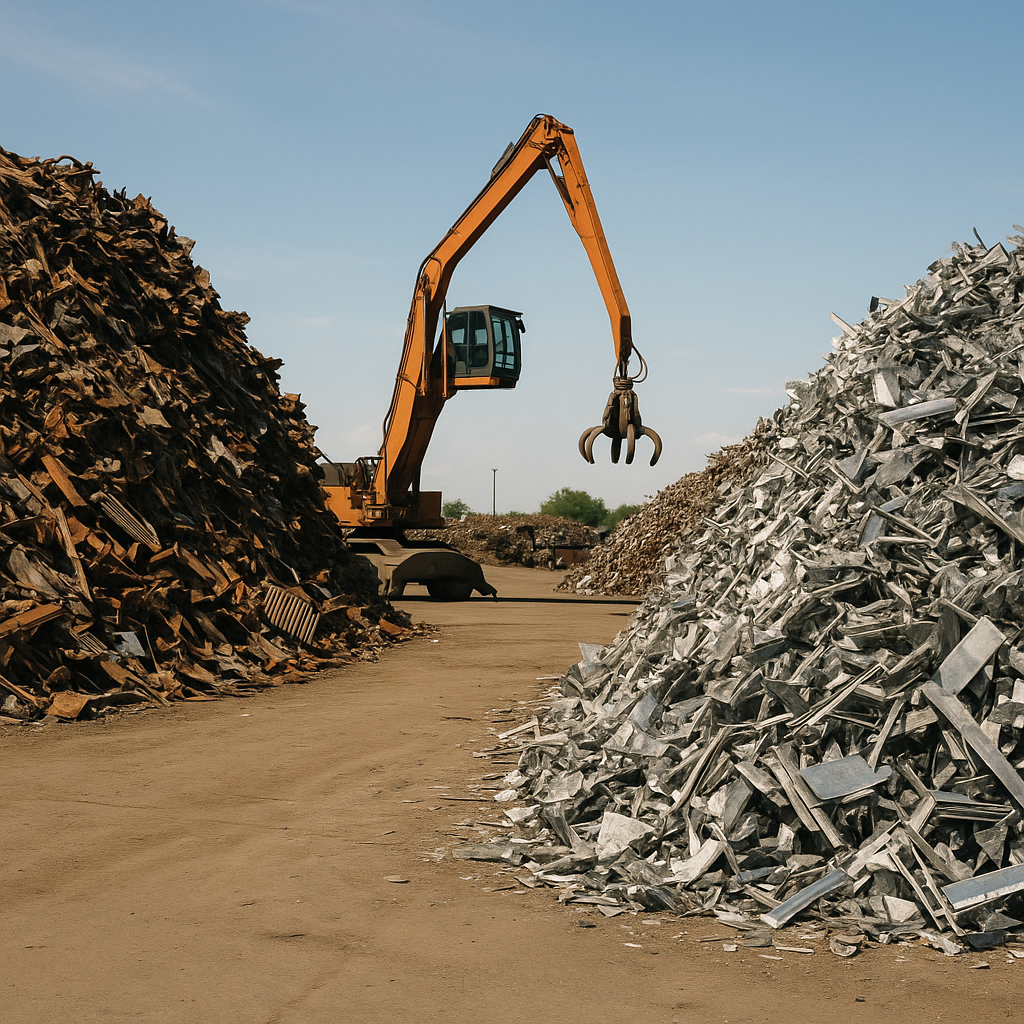
Scrap metal recycling converts discarded materials into valuable raw materials through a systematic, multi-stage process. This process begins with collection from diverse sources and ends with refined metal products ready for manufacturing. Each stage requires specialized equipment and techniques to ensure efficient material recovery and high purity levels.
Sorting and Separation Operations
Material sorting represents a critical first step. Workers and automated systems separate scrap metal into two primary categories: ferrous metals and non-ferrous metals. This classification determines the specific processing methods and equipment required for each material type.
Ferrous metals contain iron and possess magnetic properties that make separation straightforward. Large electromagnets attached to cranes sweep across scrap piles to collect steel and iron. Non-ferrous metals—such as copper, aluminum, brass and zinc—lack iron content and require advanced sorting technologies. Spectrometers and electrical currents help separate these high-value materials, which command premium prices due to their superior properties and widespread industrial applications.
Processing and Preparation Methods
Processing operations reduce scrap to manageable sizes for efficient melting. Hydraulic machinery, including industrial shears and balers, powers much of this equipment. Shredding is the most common technique; large machines break down bulky items like automobiles and structural materials into smaller fragments. This increased surface area promotes faster melting and allows materials to pack more efficiently into furnaces.
Melting and Purification Stages
Melting occurs in specialized furnaces. Electric arc furnaces (EAF) commonly process steel scrap, while other designs handle non-ferrous alloys. Purification removes contaminants and impurities from the molten metal. Furnace operations generate “slag,” which floats to the surface for removal. Advanced purification may include electrolysis or chemical treatments to ensure the metal meets rigid quality standards for high-performance manufacturing.
Solidification and Product Formation
Solidification transforms purified molten metal into usable forms. Cooling processes shape the metal into bars, sheets, coils and wire configurations. These forms facilitate transportation and provide manufacturers with materials in convenient sizes. Recycled content often comprises 70 to 90 percent of the final product, demonstrating the effectiveness of the modern recycling loop.
Advanced Metallurgy: Ensuring Purity with XRF and LIBS Technology
In the industrial recycling sector, simply knowing that a metal is “aluminum” or “stainless steel” is often not enough. To maximize the value of industrial scrap, professional facilities utilize advanced metallurgical identification technology to determine the exact chemical composition of every load.
X-Ray Fluorescence (XRF) Analysis
X-ray Fluorescence (XRF) analyzers are handheld devices used by recycling technicians to get an instant chemical breakdown of a metal sample. By emitting x-rays that excite the atoms in the metal, the device can identify specific elements like nickel, chrome, molybdenum or titanium. This is vital for industrial facilities generating high-performance alloys. For example, XRF can distinguish between 304 and 316-grade stainless steel in seconds, ensuring the seller is paid the premium for the higher molybdenum content in the 316-grade.
Laser-Induced Breakdown Spectroscopy (LIBS)
While XRF is excellent for heavy metals, Laser-Induced Breakdown Spectroscopy (LIBS) has emerged as a superior tool for identifying light elements, particularly in aluminum alloys. This technology uses a high-focused laser to create a small plasma on the metal surface, which is then analyzed to determine the alloy series (such as 2000, 6000 or 7000 series). For aerospace and automotive manufacturers, LIBS ensures that light-alloy scrap is sorted with near-perfect accuracy, maintaining the integrity of the secondary material stream.
Industrial Best Practices for Source Segregation
For large-scale manufacturing and demolition projects, the financial return on scrap metal depends largely on how the material is handled before it leaves the site. Implementing professional source segregation is the most effective way to boost material revenue.
The “Never Mix” Rule
The golden rule of industrial recycling is to never mix different metal types. When high-value copper is mixed with low-value steel, the entire load is often graded at the lowest common denominator price. Facilities should utilize color-coded bins and clear signage to ensure that employees separate “solids,” “turnings” and “clips” at the point of generation. This reduces the labor required at the recycling facility and translates directly into higher payouts for the organization.
Managing “Boneyard” Inventory
Many industrial facilities maintain a “boneyard” of obsolete machinery and structural steel. A professional recycling partner can conduct a waste stream audit to evaluate these assets. Often, old chillers, boilers and conveyor systems contain hidden assets like copper coils and stainless steel fittings. Systematically dismantling these units rather than selling them as “mixed iron” can often triple the recovery value for the facility manager.
What Are the Different Types of Recyclable Metal?
Scrap metal is divided into two fundamental categories. A simple magnet test can identify which category your material belongs to: If it sticks, it is ferrous; if not, it is non-ferrous.
Ferrous Metals: The Backbone of Industry
Ferrous metals contain iron and are magnetic. They represent the largest volume of recycled metals. Steel dominates this stream, found in structural beams, automotive frames and food cans. Cast iron is also a significant source, appearing in plumbing fixtures and engine blocks. While they fetch lower prices per pound than non-ferrous metals, their abundance makes them a staple for large-scale recovery programs.
Non-Ferrous Metals: The High-Value Stream
Non-ferrous metals lack iron and resist magnetism. These materials command premium prices due to their superior conductivity and corrosion resistance. Aluminum is a leader in this category, valued for its lightweight nature in aircraft and beverage cans. Copper is the most valuable common non-ferrous metal, essential for electrical wiring and renewable energy systems. Brass and bronze, both copper alloys, offer additional high-value returns for plumbing and marine applications.
| Metal Type | Common Examples | Magnetic? | Key Value Driver |
|---|---|---|---|
| Ferrous | Steel, Iron, Structural Beam | Yes | High volume & durability |
| Non-Ferrous | Copper, Aluminum, Brass | No | Conductivity & Purity |
| Stainless Steel | 304/316 Food Grade | Rarely | Chrome & Nickel content |
| Superalloys | Inconel, Monel, Hastelloy | No | Rare element concentration |
What Are the Key Benefits of Recycling Scrap Metal?
The environmental and economic impacts of scrap metal recycling are profound, serving as the foundation for modern sustainable development.
Environmental Preservation and Energy Savings
Resource conservation is a primary driver. Mining for virgin ore requires land clearing and water-intensive extraction. Recycling eliminates these destructive practices. The energy savings are remarkable: Recycling aluminum saves 95 percent of the energy required for primary production, while steel recycling consumes 60 percent less energy than virgin ore production. These reductions directly lower greenhouse gas emissions, addressing global climate challenges.
Economic Resilience and Job Creation
The industry employs more than one million workers in the United States and generates $236 billion annually. It produces 36 times more jobs than incinerators and six times more than landfills. Furthermore, manufacturing costs decrease when industries use recycled metals as feedstock. Recycled inputs cost less than newly mined materials, allowing manufacturers to maintain competitive pricing in global markets. Supply chain resilience also improves, as domestic scrap supplies reduce reliance on volatile international mining markets.
Conclusion: The Impact of Your Scrap Metal Program

Scrap metal recycling is more than just a waste management strategy; it is a critical economic and environmental engine. By conserving finite natural resources and reducing energy consumption by up to 95 percent for certain metals, this practice protects our planet while strengthening the industrial base. In 2026, the transition to high-purity material recovery and advanced sorting technology has made metal recycling the most viable path toward a zero-waste future.
Every ton of recycled material fuels the circular economy and supports local economic development. Whether you are a facility manager seeking to monetize manufacturing waste or a municipality looking for sustainable disposal solutions, your participation creates a lasting positive impact.
For comprehensive scrap metal recycling services that maximize your ROI and support your sustainability goals, contact Okon Recycling at 214-717-4083.
Send Us a Message
Questions about what we do? Interested in commercial services? Let us know below and a member of our team will get back to you.