5901 Botham Jean Blvd, Dallas, TX 75215
Why Recycling Prototype Solar Panels Is Key for a Sustainable Future
December 26, 2025Solar energy deployment is accelerating at an unprecedented rate, but this growth presents a challenge that requires immediate attention. Global solar panel waste is projected to increase from just 0.2 million tonnes in 2021 to over 200 million tonnes by 2050, according to IRENA’s circular economy analysis. Without proactive solutions, the overwhelming volume of end-of-life solar panels could negate the environmental benefits that solar technology aims to deliver.
Traditionally, solar panel manufacturing has followed a linear model where materials are extracted, used and then discarded at the end of their 25 to 30-year lifespan. This creates substantial waste management challenges and wastes valuable raw materials like silicon, silver and high-quality glass. However, innovations in recycling prototype solar panels are changing this approach, demonstrating that circular solar economy principles can be effective in practice. These prototypes show that recovered materials can be converted back into high-performance components without compromising quality or efficiency.
What Are the Main Challenges in Solar Panel Recycling?
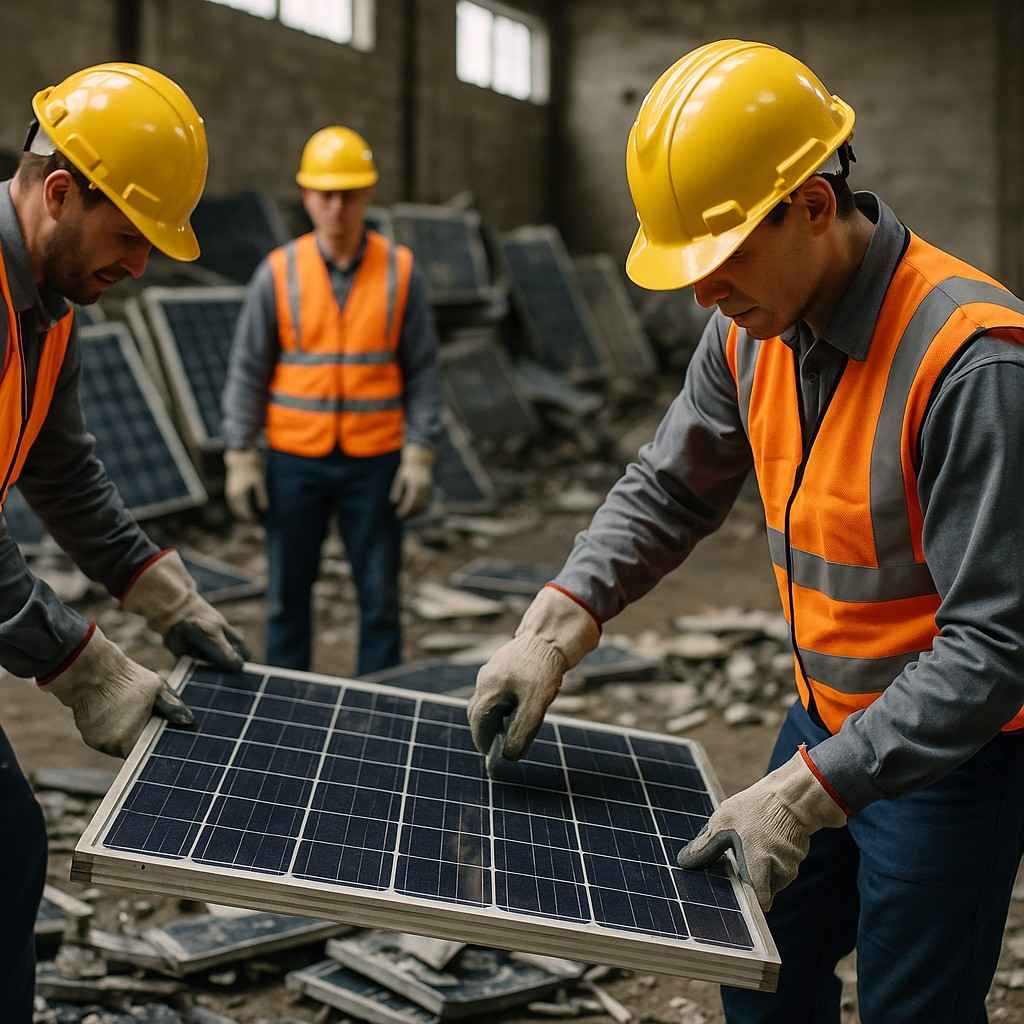
Solar panels present unique recycling challenges due to their design for long-term outdoor durability. The various layers are bonded using strong adhesives and encapsulants that resist weather, moisture and temperature extremes, making disassembly at the end of their lifespan challenging.
The complex structure comprises multiple materials fused together. Crystalline-silicon panels contain tempered glass, aluminum frames, silicon cells, polymer encapsulants and metal contacts. Each component needs different separation techniques to recover valuable materials like silver, copper and aluminum, while safely managing hazardous materials such as lead and cadmium.
Economic factors pose a significant barrier to widespread recycling. Processing costs can often exceed the value of recovered materials, particularly from older panels with lower silver content. Transport expenses add to this challenge, as panels frequently travel long distances to specialized facilities. Research from the National Renewable Energy Laboratory confirms that traditional methods to collect, sort and extract materials from end-of-life products are not always cost-effective without industrial scale.
Infrastructure constraints also limit accessibility. Few specialized facilities exist to handle the complex separation processes needed for solar panels. Different panel technologies add complexity, as thin-film modules require different processing than crystalline-silicon panels, hindering standardization in industrial recycling. However, as of 2025, new automated facilities are beginning to bridge this gap by lowering the “per-panel” cost of processing.
New 2025 Texas Legislation: HB 3228 and Industrial Compliance
As the “Solar Capital” of the South, Texas has moved quickly in 2025 to regulate the end-of-life phase of renewable energy projects. On Sept. 1, 2025, several landmark laws went into effect that fundamentally changed the obligations of solar developers and facility owners.
Mandatory Recycling for Utility-Scale Projects
Texas House Bill 3228 now mandates that utility-scale solar and wind projects must recycle all facility components that are practicably capable of being reused or recycled. This legislation prevents developers from simply landfilling thousands of tons of steel racking and aluminum frames, ensuring these materials enter the regional industrial supply chain. For facility managers, this means that a “Zero Landfill” policy is now a legal requirement rather than just a sustainability goal.
Decommissioning Bonds and Financial Assurance
HB 3229 requires solar project lessees to provide financial assurance to landowners, ensuring that funds are available for decommissioning and recycling. This financial “safety net” protects Texas landowners and municipalities from being left with orphaned infrastructure. Professional recyclers play a vital role here by providing the verified cost estimates and certificates of recycling needed to satisfy these financial assurance requirements.
Innovative Recycling Processes for Different Panel Types
Advanced Crystalline Silicon Panel Processing
Crystalline silicon panels comprise about 90 percent of the solar market. The most advanced processes initiate with automated disassembly systems that remove aluminum frames and junction boxes using precise mechanical tools. This preserves component integrity and prevents cross-contamination.
Thermal processing is a significant innovation. Modern facilities use controlled pyrolysis at temperatures near 500°C to decompose polymer encapsulants without harming the silicon cells. This method burns off EVA (ethylene vinyl acetate) materials, allowing clean access to silicon wafers. Recent IEA PVPS research shows that acid etching can recover silicon at 99.999 percent purity, making it suitable for direct reuse in semiconductor applications.
Specialized Thin-Film Recovery Methods
Thin-film technologies, including cadmium telluride (CdTe) and copper indium gallium selenide (CIGS) panels, require different approaches. These panels contain valuable, potentially hazardous semiconductor materials demanding specialized handling. Recovery facilities now utilize hydrometallurgical processes to selectively dissolve specific elements like indium and gallium while leaving the glass intact. These recovered materials are then purified through electrolysis, producing high-purity compounds for new panel manufacturing.
| Material Type | Recovery Rate (Mechanical) | Recovery Rate (Hybrid/Thermal) | Secondary Market Use |
|---|---|---|---|
| Aluminum Frame | 100% | 100% | Aerospace & Construction |
| Glass | 70-85% | 95%+ | Glass cullet, insulation |
| Silicon Cells | <10% | 85-90% | New PV wafers |
| Silver & Copper | 50-60% | 98%+ | Electronics manufacturing |
How Is Automation Transforming the Recycling Process?
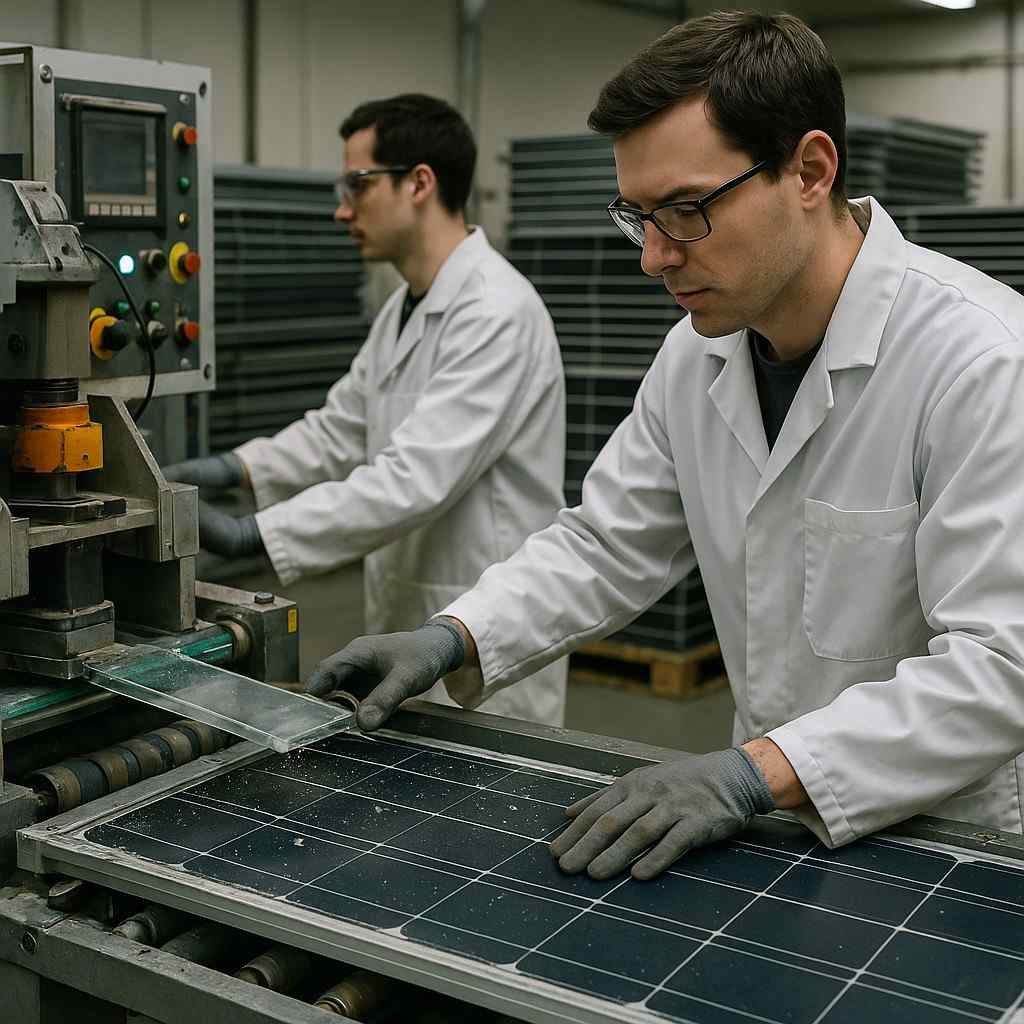
Automated technologies are changing solar panel recycling by addressing the task of precise material separation. Advanced robotics systems now efficiently perform complex disassembly tasks that were previously unmanageable at scale. These technologies elevate recycling from labor-intensive manual processes to advanced manufacturing operations.
Robotic arms with specialized grippers can dismantle panels precisely, separating frames, glass sheets and cells with minimal breakage. Using machine vision, the robots identify optimal separation points and adjust grip pressure based on material properties. This minimizes contamination and enhances the purity of recovered components. IoT sensors throughout smart factories monitor every stage, providing continuous data to optimize temperature profiles and chemical concentrations.
Automation makes solar panel recycling economically viable by reducing labor costs and increasing throughput capacity. Machine vision ensures higher quality, reduced waste and smarter end-of-life recovery. These integrated approaches allow facilities to manage the growing volume of end-of-life panels while maintaining profitability through higher recovery rates.
Solar Recycling as a Strategic ESG Advantage
In 2025, Environmental, Social and Governance (ESG) goals are no longer just public relations metrics; they are core requirements for corporate energy procurement. For Texas businesses, solar recycling offers a direct pathway to meeting these increasingly stringent expectations.
Supporting Scope 3 Emission Reductions
While the electricity generated by solar panels helps reduce Scope 2 emissions, the end-of-life management of those panels falls under Scope 3 (Value Chain) emissions. By choosing a certified recycling partner, corporations can document that their retired assets did not contribute to landfill waste or toxic leaching. This data-backed transparency is critical for companies seeking to avoid “greenwashing” accusations and secure investor confidence.
Traceability and Auditable Metrics
Professional recycling programs provide auditable certificates of recycling and material recovery reports. These reports quantify the pounds of silver, copper and glass diverted from landfills. In 2025, this level of detail is necessary for compliance with global reporting standards like the Greenhouse Gas Protocol and the Sustainability Accounting Standards Board (SASB). Demonstrating a “closed-loop” lifecycle for renewable energy assets makes a company far more attractive to eco-conscious investors and large-scale corporate partners.
The Economic Potential of the Solar Recycling Market
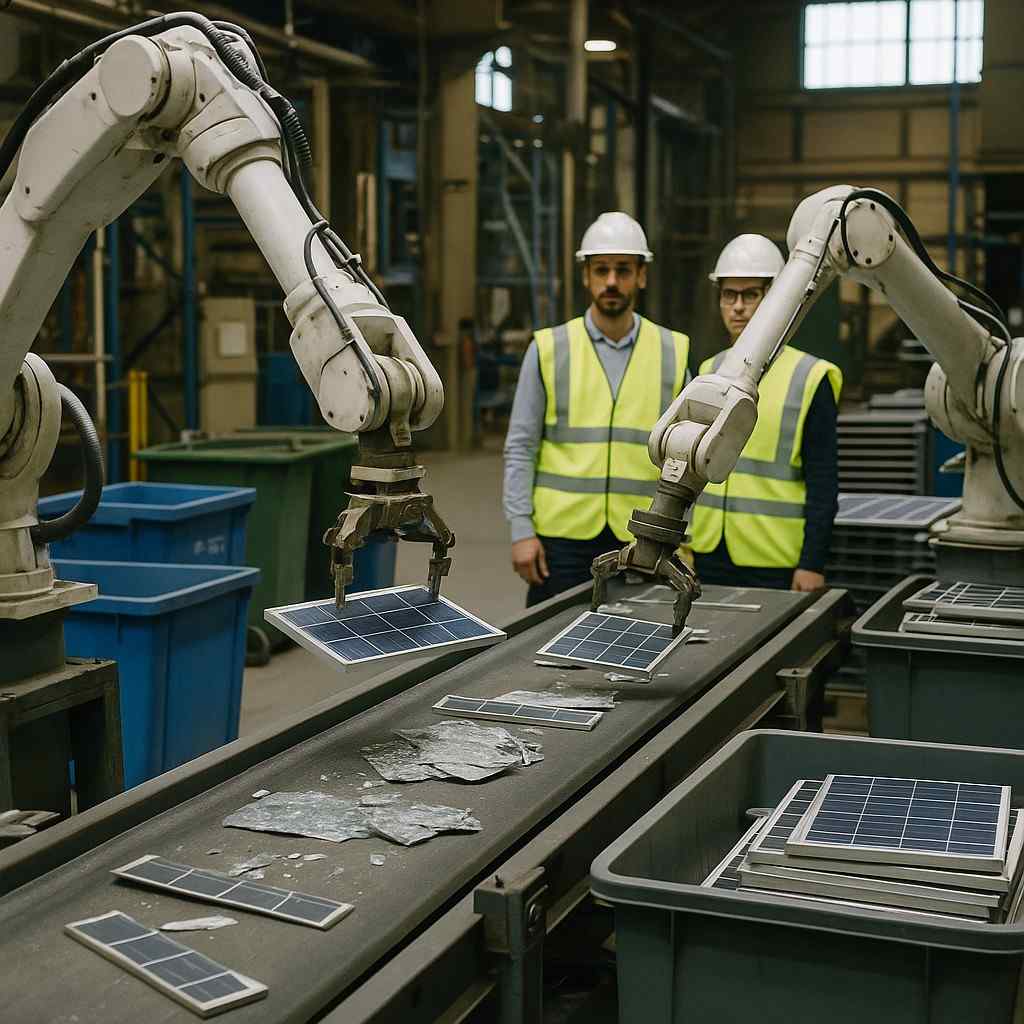
The solar panel recycling market is one of the fastest-growing segments in waste management. The current market value is approximately $460 million globally in 2025, with industry projections estimating it will hit $1.12 billion by 2030. This impressive trajectory highlights significant economic opportunities for the industrial sector.
Rystad Energy research predicts the market could expand to $80 billion by 2050. Recovering these materials is significantly cheaper than mining and refining virgin resources. Silver, in particular, is highly lucrative due to its high market price and critical role in manufacturing. Material value recovery transforms what was once a waste disposal expense into a profit center. Each recycled panel can contribute enough materials to offset processing costs and support new production.
Strengthening Supply Chains and Creating Jobs
Solar panel recycling creates resilient supply chains less vulnerable to mining disruptions and price volatility. Green job opportunities increase as infrastructure expands. Specialized roles in PV waste management, materials recovery and recycling technology development support local economies in North Texas and beyond.
Conclusion: Building a Circular Future for Solar Energy
The solar industry is at a pivotal moment where recycling innovation is transforming the sector into a true circular solar economy. Advanced recycling technologies now recover over 95 percent of valuable materials from end-of-life panels, converting what was once waste into high-value resources. These breakthroughs in closed-loop systems ensure that silicon, silver, copper and aluminum are reintegrated into new panel production, fostering sustainable solar manufacturing that reduces environmental impact.
This circular approach represents the future of solar energy, where waste management evolves into resource management. As recycling innovation progresses and global deployment increases, the solar sector is demonstrating that sustainable energy involves sustainable practices throughout the entire lifecycle.
For organizations seeking comprehensive waste management solutions that support this circular vision, contact Okon Recycling at 214-717-4083 to discuss your recycling needs and become part of the movement toward a fully sustainable energy future.
Send Us a Message
Questions about what we do? Interested in commercial services? Let us know below and a member of our team will get back to you.