5901 Botham Jean Blvd, Dallas, TX 75215
What Should You Know Before You Sell Scrap Rotary Magnet Separators?
December 26, 2025The secondary market for rotary magnet separators offers substantial opportunities in the recycling industry. Facilities globally depend on these separators to maintain efficiency and protect their processing equipment from costly damage. In 2025, the demand for these units has reached a record high as scrap yards seek to increase the purity of their non-ferrous streams to meet stricter international standards.
Rotary magnet separators act as a frontline defense for scrap yards and recycling facilities. These units remove ferrous metals from material streams, ensuring product purity and preventing damage to downstream equipment like shredders and conveyors. The separation process protects expensive machinery while maintaining the quality standards essential for profitable operations.
Understanding market demand requires knowledge of equipment types and industrial marketplaces. Industrial machinery platforms connect sellers with facilities seeking both new and used magnetic separation equipment.
What Are the Common Types of Magnetic Separators Sold for Scrap?
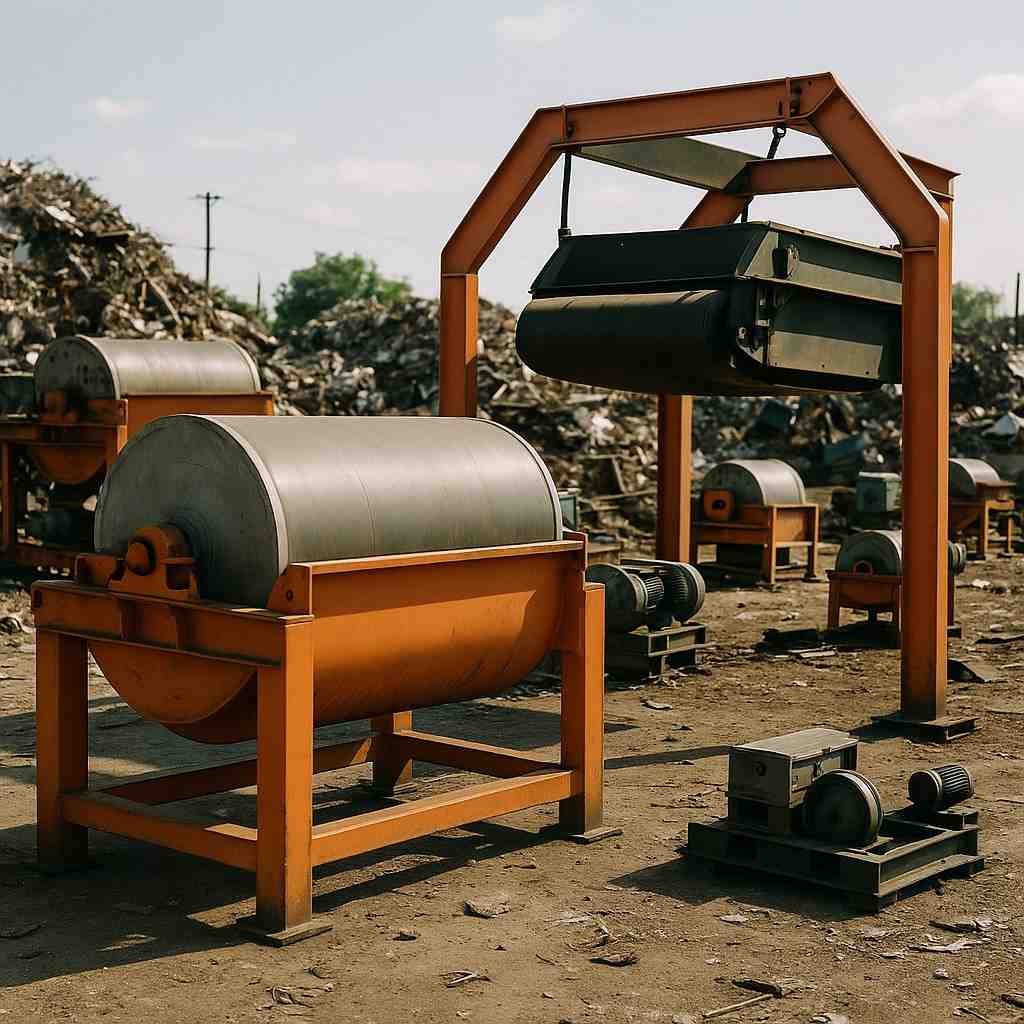
The scrap recycling industry relies on various types of magnetic separators to efficiently extract ferrous metals from mixed waste streams. Each design targets specific applications and material characteristics, aiding facilities in selecting the appropriate equipment for their processing needs.
Overhead and Crossbelt Magnets
Overhead magnetic separators are among the most widely used in scrap operations, suspended above conveyor belts to automatically remove ferrous materials. Crossbelt magnets feature self-cleaning mechanisms with continuously rotating belts to discharge captured metals. These are the workhorses of large-scale municipal and industrial sorting lines.
Drum Magnetic Separators
Drum magnetic separators provide continuous separation with their rotating cylindrical designs. The drum magnet systems use internal permanent magnets to attract ferrous particles as materials pass over the rotating shell, effectively separating iron from aluminum scrap, construction debris and recycled materials.
| Separator Type | Primary Application | Key Advantage |
|---|---|---|
| Overhead Suspended | General scrap sorting | High reach for deep material beds |
| Crossbelt (Self-Cleaning) | High-volume automated lines | Zero downtime for cleaning |
| Drum Magnet | Fine particle & shredded scrap | Extreme purity in secondary streams |
| Magnetic Head Pulley | Conveyor discharge points | Space-saving integrated design |
| Plate Magnet | Gravity-fed chutes | Low-cost ferrous protection |
Eddy Current Separators
While standard magnets pull ferrous metals, Eddy Current Separators use rapidly alternating magnetic fields to “repel” non-ferrous metals like aluminum and copper. In 2025, these are highly sought after in the used market because they enable the recovery of the most valuable non-ferrous assets from Auto Shredder Residue (ASR).
The 2025 Market Shift: Upgrading for Circular Economy Compliance
The industrial landscape has shifted significantly in late 2025. Major manufacturing hubs now require higher purity levels for recycled feedstock, driving a surge in the acquisition of high-gradient magnetic separators.
Meeting “Green Steel” Standards
The push for “Green Steel”—steel produced with lower carbon emissions—relies heavily on the use of high-quality scrap. However, modern furnaces require scrap that is virtually free of non-ferrous contaminants like copper, which can weaken the final product. Facilities are increasingly investing in rotary magnetic separators to perform a “final polish” on their ferrous streams, ensuring they meet these premium specifications.
Rare Earth Element Scarcity
Many modern rotary separators utilize neodymium or other rare earth materials. As global supplies of these elements face pressure, the value of separators containing these high-strength permanent magnets has increased. Sellers should highlight if their units use Rare Earth (RE) magnets, as they can capture fine or weakly magnetic particles that standard ceramic magnets miss.
Key Features to Highlight When Selling Magnetic Equipment
When marketing magnetic separators, providing clear information about operational features is essential. Focus on these specifications that directly impact performance and resale value.
Self-Cleaning vs. Manual Operation
The cleaning mechanism is a crucial selling point. Self-cleaning units, which use rotating magnetic bars or cleated conveyor belts to discharge metal, are preferred for 24/7 operations. Manual units require periodic shutdowns but are often more durable in extreme environments. Highlighting “automatic discharge” functionality can often command a 20% to 30% price premium.
Power and Drive Specifications
Power specifications affect installation. Note the motor horsepower (typically 5 to 75 HP) and whether the drive system is electric or hydraulic. In 2025, units equipped with variable frequency drives (VFDs) are particularly popular, as they allow for precise speed adjustments to match the flow of different material types.
Magnetic Intensity and Field Depth
Buyers need to know if the magnet is Permanent or Electromagnetic. Permanent magnets offer energy savings and reliability, while electromagnets allow for adjustable field strength. Provide the Gauss rating if available, as this technical data is the primary metric buyers use to determine if a separator can pull metal through a specific depth of material on a belt.
Advanced Maintenance: Maximizing Equipment Lifespan and Resale Value
To maintain peak efficiency and high resale value, a rigorous maintenance schedule is required. Magnetic separators operate in the most abrasive environments in the industrial world.
Predictive Maintenance and AI Integration
Leading facilities in 2025 have begun integrating sensors that monitor the heat and vibration of separator bearings. Overheating in an electromagnetic separator can lead to a loss of magnetic strength, a phenomenon known as “thermal fading.” Documenting a history of thermal monitoring can prove to a buyer that the magnetic coils haven’t been compromised by excessive heat.
Shell and Belt Integrity
For drum magnets, the outer stainless steel or manganese shell is a wear item. If the shell wears thin, it can eventually be breached, causing catastrophic damage to the internal magnet assembly. Sellers should provide “shell thickness” measurements. Similarly, for crossbelt magnets, the condition of the cleats and the vulcanized joints of the belt are indicators of how much life is left in the unit before a major overhaul is needed.
Gauss Testing and Validation
Regularly performing a “Pull Test” or Gauss meter reading is the only way to verify that a magnet is still operating at its factory-rated strength. Factors like physical impact, extreme heat or simply age (in the case of certain ceramic magnets) can degrade the field. Providing a recent “Magnet Validation Certificate” is the best way to secure top-dollar pricing in a competitive used market.
Where Are the Best Places to Sell Scrap Magnetic Separators?

Specialized online marketplaces dominate the niche for selling magnetic separators. These platforms cater to industrial equipment buyers who understand the technical details of materials recovery. This focused audience ensures sellers reach qualified prospects instead of general consumers.
Industrial surplus sites provide detailed specifications and photographs for each listing, enabling potential buyers to assess equipment condition. These platforms often reach over 130,000 rated firms worldwide. Global marketplaces are especially valuable for specialized equipment because scrap metal processing facilities often require specific configurations—such as a specific belt width or magnetic depth—that may not be available locally.
International reach allows sellers to connect with decision-makers in emerging markets where infrastructure for the circular economy is rapidly expanding. This ensures that even older, less-efficient magnets can find a new home in facilities where they still provide a significant upgrade over manual sorting.
Conclusion: Successfully Selling Your Separation Equipment

Successfully selling rotary magnet separators requires a strategic approach focused on clear equipment identification and targeted marketing. Providing detailed specifications about your separator type—whether drum, crossbelt or rotary design—along with key operational features like cleaning mechanisms and power requirements, significantly enhances buyer confidence. Specialized industrial platforms connect you with buyers in the scrap processing and recycling sectors who understand the equipment’s value in material recovery.
The growing demand for recycling equipment due to global sustainability regulations creates favorable market conditions for sellers. By presenting comprehensive technical documentation and leveraging specialized industrial equipment platforms, you can achieve better pricing and faster transactions.
For businesses seeking to optimize their recycling operations or upgrade their materials recovery systems, contact Okon Recycling at 214-717-4083 for expert guidance on recycling solutions.
Send Us a Message
Questions about what we do? Interested in commercial services? Let us know below and a member of our team will get back to you.