5901 Botham Jean Blvd, Dallas, TX 75215

The Role of Recycling Scrap Yard Magnets in Modern Metal Handling
January 10, 2026Mountains of twisted steel beams tower overhead while shredded metal cascades from processing equipment. The constant clatter of ferrous materials echoes through facilities where tons of scrap are sorted, lifted and moved efficiently. In these demanding environments, traditional manual handling methods cannot meet the speed and safety requirements that modern recycling operations demand in 2026.
Recycling scrap yard magnets are powerful, high-performance tools designed to tackle the unique challenges of moving steel scrap. These electromagnetic systems generate controlled magnetic fields that can instantly attract and release ferrous materials with precision. Unlike permanent magnets, electromagnets produce magnetic force only when electricity passes through their internal coils, allowing operators to precisely regulate lifting power and material release at the flick of a switch.
These magnets provide a streamlined way to collect, sort and process a wide variety of ferrous materials, from industrial residues to demolition waste. They enhance efficiency, safety and profitability in scrap yards, steel mills and recycling plants. Lifting magnets transform chaotic material handling into controlled operations, maximizing throughput while minimizing workplace hazards and operational costs.
Why Is Specialized Equipment Needed to Handle Scrap Metal?
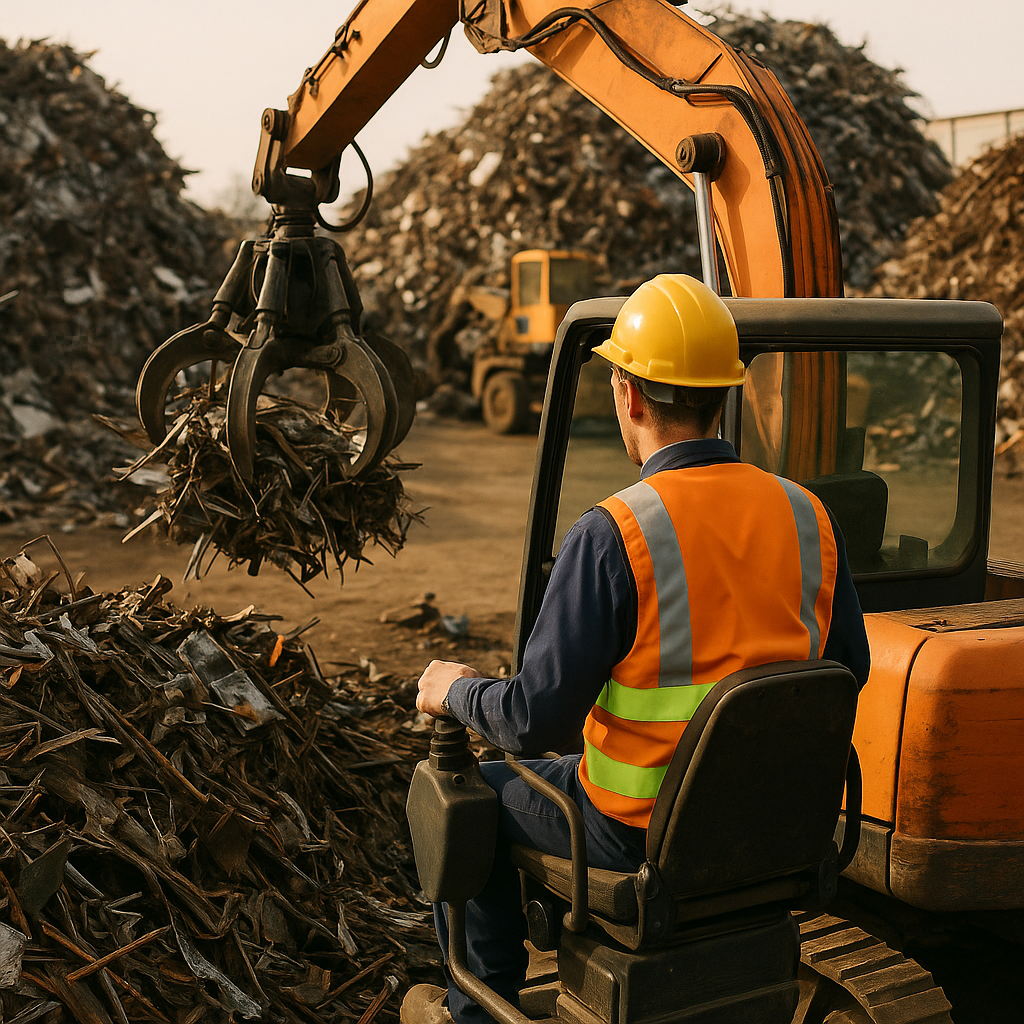
Handling scrap metal requires specialized equipment because standard material handling systems cannot adequately manage the unique challenges these materials present. The unpredictable weight distribution, irregular shapes and sharp edges of demolished scrap necessitate machinery designed specifically for these conditions. In a high-volume facility, the use of standard grapples or buckets often leads to “bridging” or material loss, whereas an industrial magnet ensures a secure, comprehensive pick.
Physical Challenges Require Industrial Solutions
Scrap materials present several handling obstacles that demand purpose-built electromagnetic systems:
- Irregular shapes that resist conventional hydraulic gripping mechanisms
- Varying densities within single loads (e.g., mixing heavy structural beams with light tin)
- Sharp edges that pose significant cut hazards to ground personnel
- Large volumes that exceed the volumetric capacity of standard buckets
- Contamination with rust, concrete or non-metallic debris that must be “shaken” off
These challenges make standard material handling equipment ineffective and potentially dangerous. OSHA guidelines for metal scrap recycling emphasize that specialized equipment protects workers from injuries common in facilities lacking proper magnetic handling systems. By utilizing magnets, facilities can maintain a “no-touch” policy, where workers remain safely away from the active scrap pile.
How Electromagnets Work: The Physics of the Industrial Lift
To maximize the efficiency of a scrap yard, operators should understand the underlying physics of their lifting magnets. This knowledge helps in selecting the right tool for specific scrap types and ensures the equipment is used within its safe operating parameters.
The Electromagnetic Coil and Flux Field
An industrial scrap magnet consists of a massive internal coil, typically made of copper or aluminum, encased in a heavy steel housing. When DC power is applied, the coil generates a magnetic flux field. This field flows through the steel shell and out of the bottom plate, creating a circuit that “completes” itself through the ferrous metal being lifted. The depth of this field—often called the “deep field”—determines how many layers of scrap the magnet can pull from a pile. High-performance magnets are engineered with high-permeability steel to maximize this flux density.
Duty Cycle and Heat Management
The “Duty Cycle” is perhaps the most important specification for an industrial magnet. Most scrap magnets are rated for a 75 percent or 100 percent duty cycle. A 75 percent duty cycle means that for every 10 minutes of operation, the magnet can be “on” for seven minutes and 30 seconds. Overstepping this limit causes the internal coils to overheat. As temperature rises, electrical resistance increases, which weakens the magnetic field. Professional facilities monitor these cycles carefully to prevent “thermal fade” and extend the life of the internal insulation.
What Are the Different Types of Scrap Yard Magnets?
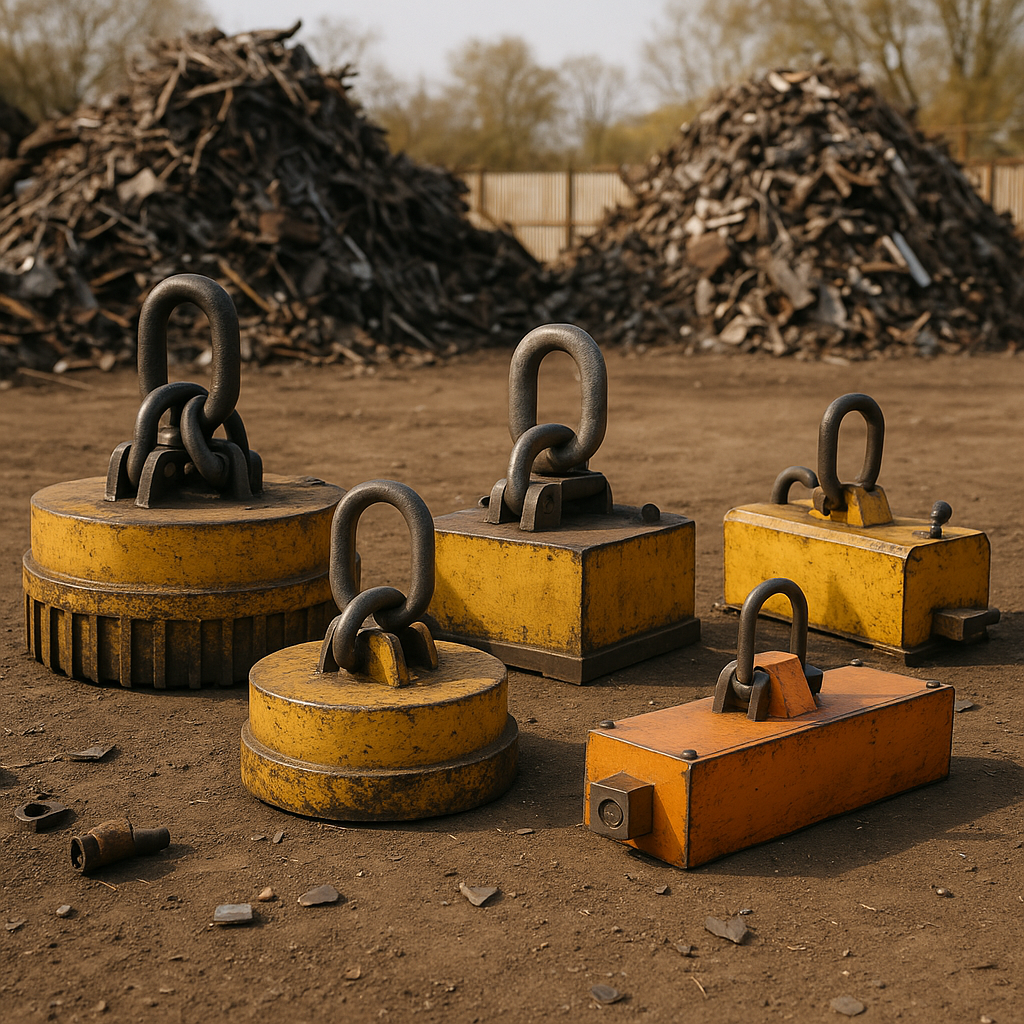
Professional scrap yards utilize several specialized magnet types designed for various material handling needs. Choosing the right design can significantly impact cycle times and material recovery rates.
Circular Electromagnets
Circular electromagnets are the industry standard for high-volume scrap processing. These round magnets feature cast steel shells that ensure excellent magnetic permeability and durability under challenging conditions. The circular design distributes the magnetic field evenly, allowing operators to handle diverse scrap types effectively, from steel ball bearings to irregular metal debris. Most circular electromagnets operate at 230V DC for optimal performance.
Heavy-Duty and High-Temperature Variants
Heavy-duty systems are ideal for handling dense materials like pig iron and cast ingots. For foundries and steel mills, high-temperature electromagnets are essential. These units can withstand extreme heat up to 650°C, incorporating heat-resistant aluminum coils and specialized Class H insulation to prevent thermal damage when processing materials directly from furnaces.
Hydraulic-Powered Magnets
Hydraulic magnets integrate directly with a machine’s hydraulic system, eliminating the need for separate electrical generators. These units draw power from excavator or crane circuits, simplifying installation. These are particularly valuable for mobile recycling operations and demolition sites where a dedicated power source is unavailable.
| Magnet Type | Primary Power Source | Industrial Application | Max Heat Resistance |
|---|---|---|---|
| Standard Circular | 230V DC Generator | General Scrap / Yard Sorting | Ambient |
| Hydraulic Integrated | Machine Hydraulics | Mobile Demolition / Remote Sites | Ambient |
| High-Temp Foundry | 230V DC Generator | Hot Slag / Furnace Charging | 650°C |
| Rectangular / Square | 230V DC Generator | Rail Car Cleaning / Plate Steel | Ambient |
Safety Protocols: Risk Mitigation in Magnetic Lifting
While electromagnets are safer than manual handling, they introduce specific risks that require strict site protocols. If power is lost, the magnet instantly releases its load, making safety compliance a non-negotiable aspect of scrap yard management.
The Danger of Power Interruption
The primary risk in electromagnetic lifting is a sudden loss of current. This can be caused by a severed cable, a generator failure or a tripped breaker. Professional recyclers mitigate this risk by establishing “exclusion zones” where no personnel are allowed to stand within the swing radius of the crane. Many modern systems also incorporate battery backup units (BBUs) that provide enough emergency power to hold a load for several seconds, allowing the operator to safely lower the material in the event of a power failure.
Medical Interference and Electronic Safety
Industrial magnets generate incredibly strong magnetic fields that can extend several feet beyond the magnet itself. Site signage must clearly warn individuals with medical implants—such as pacemakers or insulin pumps—to remain outside the restricted zone. Furthermore, high-strength magnetic fields can erase data from hard drives or damage sensitive electronic equipment. For Texas businesses, adhering to these safety standards is essential for maintaining OSHA compliance and protecting the workforce.
What Are the Key Features of a High-Performance Scrap Magnet?
When selecting a magnet for industrial use, several structural and electrical components set high-performance units apart from entry-level models.
Structural Durability Components
The cast steel shell serves as the primary protective barrier against impact damage. This is supplemented by a manganese steel bottom plate, which offers superior toughness and wear resistance where the magnet contacts abrasive scrap. Unlike standard steel, manganese steel “work-hardens,” meaning it becomes tougher the more it is struck by sharp metal edges. Multiple bumper perimeter plates further absorb impact energy, protecting the internal coil from the constant jolts inherent in the demolition industry.
Advanced Electrical System Design
Reliable electrical systems include fully protected, weatherproof terminals that prevent moisture infiltration. Class H insulation provides the highest level of thermal resistance, allowing the magnet to operate in Texas summer heat without the risk of internal short-circuiting. Quick-disconnect assemblies are also vital, as they allow for rapid magnet changes and simplify routine maintenance, reducing facility downtime.
Heat Management Technology
Effective heat dissipation is critical for longevity. Anodized aluminum strip windings have become the industry standard because they maximize heat transfer away from the coil. Aluminum conducts heat more effectively than copper in these specific applications and offers a significant weight reduction, which allows for larger magnets on smaller carrier machines. Shock-resistant high-dielectric compounds fill the spaces around these components, eliminating air gaps and preventing electrical arcing.
Conclusion: Optimizing Operations With the Right Magnet

Selecting the appropriate industrial scrap yard magnet is essential for operators aiming to improve efficiency and boost profitability. This decision requires a careful assessment of factors such as the density of scrap materials, the duty cycle of your operation and the environmental conditions of your facility. Whether you are utilizing circular electromagnets for mixed residential scrap or rectangular designs for structural steel beams, the right magnetic solution enhances productivity while ensuring the highest safety standards.
Effective scrap yard operations depend on equipment that performs reliably and streamlines material flow. Modern magnetic systems provide tailored engineering solutions for the most difficult material handling challenges, significantly reducing labor costs and cycle times.
For operators wanting to recycle magnets, contact Okon Recycling at 214-717-4083 for expert guidance.
Send Us a Message
Questions about what we do? Interested in commercial services? Let us know below and a member of our team will get back to you.