5901 Botham Jean Blvd, Dallas, TX 75215
Discover How Franklin County Managing Waste as Part of Its Sustainability Goals
December 18, 2025Franklin County faces a growing challenge affecting both environmental health and economic stability. Each year, residents and businesses in Central Ohio generate over one million tons of waste material. The question is: how can this massive waste stream support sustainability goals instead of undermining them?
The local waste authority serves as the primary solution for this challenge, going beyond traditional collection by actively reducing landfill reliance through comprehensive waste management strategies. The county manages a sanitary landfill with an 8,000-ton daily capacity and operates transfer stations that handle approximately 3,000 tons per day.
This approach aligns with broader sustainability objectives through a comprehensive Carbon Emissions Management Plan, which aims for a 64% reduction in carbon emissions by 2032. This ambitious plan incorporates renewable energy sources, including solar installations, and supports circular economy practices that turn waste streams into economic opportunities. Integrating solar energy projects at closed landfill sites demonstrates how the region is converting environmental challenges into sustainable solutions, while also addressing the emerging need for effective solar waste management systems.
Multi-Faceted Approach to Waste and Energy Management
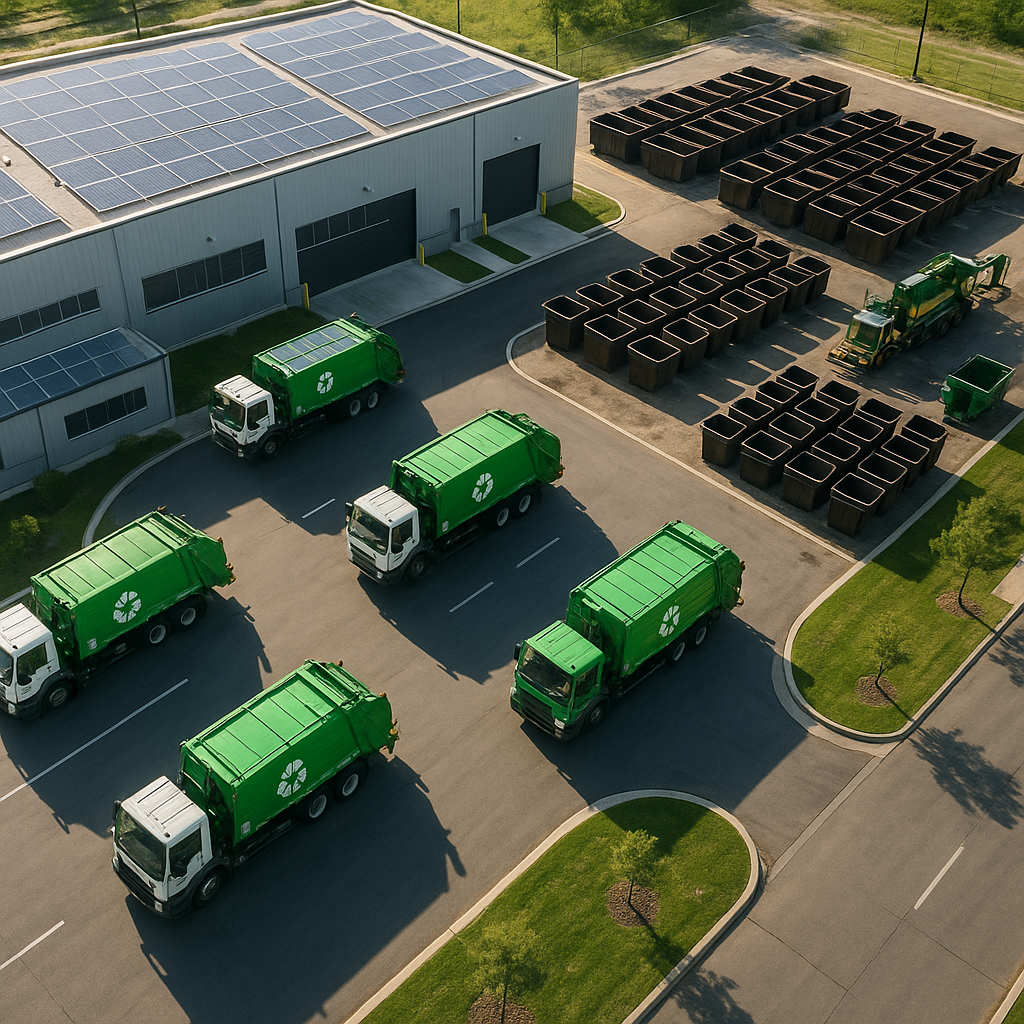
The county has developed a strategic carbon emissions management plan, addressing environmental impact in four key areas. This framework shows how waste management authorities can efficiently tackle climate challenges while aligning with the International Paris Agreement to limit global temperature increases to 2.7°F (1.5°C).
Four Strategic Environmental Categories
The carbon reduction strategy focuses on these core areas:
- Waste Management: Implementing recycling, composting, and material reuse programs while supporting circular economy practices. This includes purchasing supplies made from recycled content to close the resource loop.
- Landfill Gas Emissions Management: Capturing and reusing methane gas through public-private partnerships. This prevents harmful greenhouse gases from entering the atmosphere and creates clean energy capable of heating more than 13,000 homes in the region annually.
- Vehicle and Equipment Fuel Management: Transitioning fleet operations from traditional fuels to alternatives like compressed natural gas (CNG) and electricity, significantly reducing emissions from waste collection and transport.
- Energy Management: Reducing electricity and fuel consumption at administrative facilities through conservation measures and integrating renewable energy, including solar, wind, and geothermal sources.
This approach recognizes that effective carbon management requires comprehensive action. By addressing emissions from facilities, transportation, and waste processing, the county creates multiple pathways for achieving its 2032 reduction targets.
Community Engagement and Education Programs
Franklin County’s sustainability success depends heavily on active community participation and informed residents. The waste authority has developed comprehensive education initiatives that transform public understanding of waste management from a municipal responsibility into a shared environmental commitment.
School and Youth Education Initiatives
Educational programs reach students throughout Franklin County schools, introducing sustainability concepts at early developmental stages. Interactive presentations cover proper sorting techniques, the lifecycle of recyclable materials, and the environmental consequences of improper waste disposal. These sessions engage young learners through hands-on demonstrations and facility tours that reveal how everyday choices impact regional environmental health.
Youth programs extend beyond classroom walls through summer camps and environmental leadership opportunities. Students participate in community cleanup events, recycling competitions, and sustainability projects that build lasting environmental stewardship habits. These experiences create ambassadors who carry conservation messages into their households and peer groups.
Residential Outreach and Support
Homeowner education addresses practical waste management challenges through multiple communication channels. The county distributes detailed recycling guides that clarify accepted materials, contamination prevention, and proper preparation methods. Regular newsletters highlight seasonal waste management topics, from holiday packaging disposal to yard waste composting techniques.
Digital resources provide 24/7 access to waste management information. Interactive online tools help residents identify proper disposal methods for specific items, locate collection sites, and schedule bulk waste pickups. Mobile applications send collection reminders and provide real-time updates about service changes or special events.
Business and Industrial Training
Commercial sector engagement recognizes that businesses generate substantial waste volumes requiring specialized management approaches. The county offers free waste audits helping companies identify reduction opportunities, optimize recycling programs, and implement cost-saving waste diversion strategies. These consultations reveal how improved waste management directly enhances operational efficiency and bottom-line performance.
Industry-specific training sessions address unique waste challenges facing different business sectors. Restaurants learn food waste reduction and composting techniques. Construction companies explore debris recycling and sustainable material sourcing. Retail operations discover packaging optimization and product stewardship opportunities that align business practices with environmental goals.
Community Event Support
Large-scale community events generate concentrated waste streams requiring careful planning and management. The county provides event organizers with recycling containers, educational signage, and volunteer support to implement zero-waste initiatives. These services demonstrate how temporary gatherings can minimize environmental impact through thoughtful waste infrastructure.
Post-event reporting quantifies diversion rates and identifies improvement opportunities for future gatherings. This feedback loop helps event planners refine waste management strategies while building community awareness about the collective impact of individual disposal decisions.
Infrastructure Investment and Technology Innovation
Franklin County’s sustainability ambitions require continuous infrastructure modernization and technological advancement. Strategic investments in processing facilities, collection systems, and monitoring equipment position the region at the forefront of waste management innovation.
Materials Recovery Facility Upgrades
Advanced sorting technologies transform how Franklin County processes recyclable materials. Optical sorting systems use infrared sensors and artificial intelligence to identify and separate materials with unprecedented accuracy and speed. These automated systems dramatically reduce contamination rates while increasing recovery volumes compared to manual sorting operations.
Investment in single-stream recycling infrastructure simplifies residential participation by eliminating complex sorting requirements. Residents combine paper, cardboard, plastics, metals, and glass in single containers, removing barriers that historically depressed recycling rates. Behind the scenes, sophisticated processing equipment efficiently separates these commingled materials into marketable commodity streams.
Fleet Modernization and Route Optimization
Collection vehicle upgrades reduce environmental impact while improving operational efficiency. The transition to compressed natural gas and electric trucks cuts greenhouse gas emissions by up to 90% compared to traditional diesel vehicles. These cleaner trucks also reduce noise pollution, creating quieter neighborhoods during early morning collection hours.
Smart routing software optimizes collection patterns using real-time data about traffic conditions, container fill levels, and service requirements. These intelligent systems reduce fuel consumption, minimize wear on local roads, and allow the same fleet to serve more residents efficiently. GPS tracking and automated reporting provide transparency and accountability throughout collection operations.
Landfill Technology and Management
Modern landfill operations bear little resemblance to traditional dump sites. Engineered barriers prevent leachate contamination of groundwater through multiple protective layers including compacted clay, synthetic liners, and drainage systems. Continuous monitoring wells detect any potential environmental impacts before they spread beyond landfill boundaries.
Methane capture infrastructure converts landfill gas into renewable energy rather than allowing its release into the atmosphere. This system includes a network of extraction wells, processing equipment that removes impurities, and pipeline connections delivering cleaned gas to energy customers. The facility generates enough electricity to power thousands of homes while preventing greenhouse gas emissions equivalent to removing several thousand cars from local roads annually.
Data Systems and Performance Tracking
Comprehensive data management systems track waste flows throughout Franklin County’s management network. Real-time dashboards monitor diversion rates, processing volumes, and operational metrics that inform strategic decision-making. This data visibility allows managers to identify emerging trends, evaluate program effectiveness, and allocate resources where they generate maximum environmental and economic returns.
Public-facing transparency portals share performance data with residents and stakeholders. Interactive visualizations demonstrate progress toward sustainability targets, compare neighborhood recycling rates, and highlight community achievements. This transparency builds public trust while creating positive competitive dynamics that encourage increased participation in waste reduction programs.
Hazardous Waste Disposal Options in Franklin County
The Solid Waste Management District provides several disposal options to manage household hazardous waste (HHW) safely and efficiently. Residents can access year-round facilities and scheduled collection events that protect the local ecosystem.
Permanent Collection Sites
Year-round disposal options serve as the primary HHW management resource. These facilities accept common hazardous items such as used motor oil, antifreeze, pesticides, fertilizers, and oil-based paint. Residents can drop off materials during regular operating hours, typically Monday through Friday with select Saturday hours, at the permanent facility located at 645 E. 8th Avenue in Columbus.
Mobile Collection Events
The District hosts comprehensive one-day collection events throughout the year. These mobile drop-off events often occur in different municipalities to provide easier access for residents. They accept a broad range of materials, including pool chemicals, household cleaners, and fluorescent bulbs. It is important to note that while most items are free to dispose of, latex paint may incur a small fee as it is non-hazardous and can often be dried and disposed of with regular trash.
Specialized Disposal Programs
Targeted programs exist for materials requiring careful handling. Mercury disposal and thermometer exchange programs manage materials containing toxic metals. Furthermore, targeted initiatives ensure that unwanted medications, household batteries, and electronics receive proper treatment to prevent soil and water contamination.
Safe Transportation Guidelines
Safe transportation of HHW requires specific protocols. Materials must remain in original containers with readable labels, be transported upright, and never be mixed together. These measures protect both residents and facility workers while preventing dangerous chemical reactions during transport.
Professional Solar Panel Material Recovery
Professional recovery companies offer comprehensive solutions for solar panels that have reached their operational limits. These specialized facilities handle the entire lifecycle of decommissioned systems through systematic disassembly and material separation.
The professional approach differs significantly from basic e-waste handling. Advanced recovery operations can reclaim up to 95% of a solar panel’s material value, turning potential waste into valuable resources for manufacturing new solar systems.
Comprehensive Processing Methods
Professional recovery begins with the manual disassembly of external components. Aluminum frames, junction boxes, and wiring systems are removed first, flowing directly into standard metal and plastic recovery streams.
The core process varies by technology. Crystalline silicon panels—the most common type—undergo thermal processing at approximately 500°C to break down binding adhesives. This allows for the clean separation of glass from the silicon cells. Specialized facilities for thin-film modules (such as cadmium-telluride panels) utilize dedicated shredding and chemical leaching to recover semiconductor materials like tellurium.
Material Recovery Benchmarks
- Glass: Comprising roughly 75% of a panel’s weight, glass is recovered at rates of 90-95% for use in new solar glass or construction.
- Aluminum: Extracted with 95% efficiency, frames provide a high-value stream for secondary metal markets.
- Metals: Silver contacts and copper wiring achieve recovery rates above 90%, commanding premium prices in commodity markets.
- Silicon: Recovered silicon can reduce the energy needed for new panel manufacturing by up to 50%.
Advanced Recovery Technologies
Modern operations are increasingly utilizing automated systems with robotics to optimize material sorting. Research funded by the Solar Energy Technologies Office is also exploring chemical extraction methods that target specific metals, allowing for the selective recovery of silver and copper while safely managing lead.
The circular economy benefits extend beyond waste reduction. A single recycled panel provides materials equivalent to producing new solar components, supporting sustainable manufacturing cycles throughout the renewable energy sector.
Conclusion: A Greener Future for Franklin County
Franklin County stands out with its comprehensive approach to sustainability, exemplified by its robust waste management infrastructure. The county’s dedication to reducing landfill dependence and embracing renewable energy solutions underscores its leadership in environmental stewardship. These initiatives lay the groundwork for tackling emerging challenges, such as solar waste, while encouraging community involvement in the circular economy.
The current programs offer a solid framework for ongoing environmental progress. However, specialized recovery services are crucial for managing complex industrial waste streams. Municipalities and businesses looking for advanced material recovery solutions to align with sustainability objectives can contact Okon Recycling at 214-717-4083.
Send Us a Message
Questions about what we do? Interested in commercial services? Let us know below and a member of our team will get back to you.