5901 Botham Jean Blvd, Dallas, TX 75215

Understanding Generator Decommissioning and New Power Trends
December 31, 2025For decades, backup generators in data centers had one primary function: They activated during power outages to keep servers running until grid power was restored. These power subsystems acted as insurance policies rather than core infrastructure, remaining idle for most of their operational lives until decommissioning and asset recovery.
Data centers in Texas are now completely altering this model. The demands of AI infrastructure have led to a situation where hundreds of natural gas generators now serve as primary power sources rather than backup systems. Major tech firms are installing extensive fleets of generators to circumvent the strained U.S. power grid entirely. These natural gas microgrid installations can deliver over 700 megawatts of capacity, powering AI workloads without waiting years for traditional grid connections.
This shift presents unprecedented implications for generator decommissioning in Texas. Traditional backup generators face accelerated replacement cycles as facilities upgrade to primary power configurations. Meanwhile, the vast scale of new natural gas generator installations means future decommissioning projects will involve significantly larger equipment volumes and more complex asset recovery processes.
Data Center Decommissioning and Asset Recovery in Texas
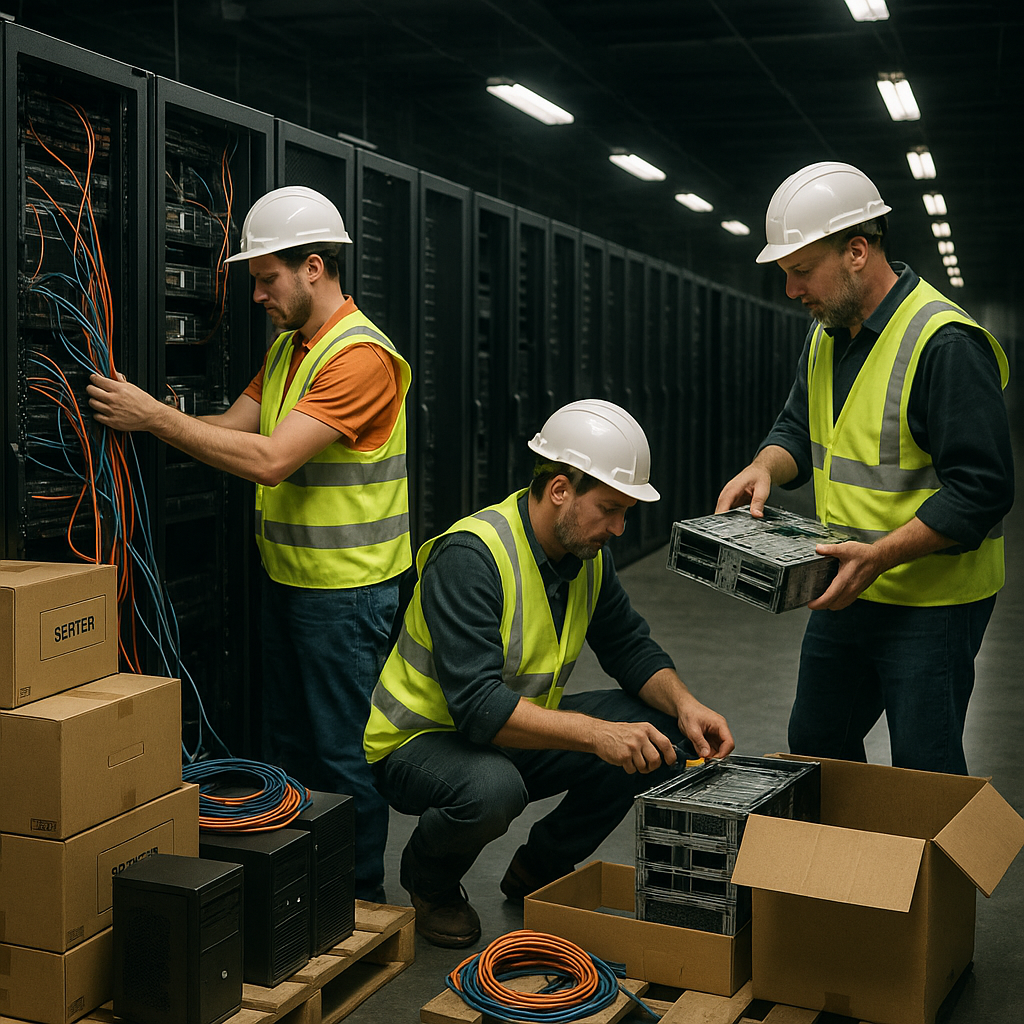
Traditional data center decommissioning in Texas involves comprehensive de-installation and removal services for facility closures, relocations, or consolidations. Organizations typically engage specialized partners for transitioning between data centers or moving operations to new locations. The process includes systematically dismantling entire IT infrastructures while maximizing asset recovery opportunities.
Professional decommissioning services manage projects of varying scales across Texas. From compact 50-square-foot server closets to expansive multi-building campuses, experienced teams handle the complete removal process. These services are essential for organizations consolidating operations, relocating facilities, or transitioning to cloud-based infrastructures.
The traditional decommissioning process targets multiple categories of equipment and infrastructure components:
- Power Systems: Industrial generators, fuel systems, and UPS battery banks.
- Electrical Infrastructure: Switchgear, transformers, and copper feeds.
- Environmental Controls: Chillers, CRAC units, and condensers.
- IT Hardware: Server racks, networking gear, and data storage arrays.
- Facility Components: Raised flooring, Power Distribution Units (PDUs), and electrical piping.
Asset recovery is a critical component of this process. Professional partners evaluate equipment condition and market value to determine which items can be resold versus recycled. This assessment helps clients offset decommissioning costs and recover portions of their original infrastructure investments. Equipment liquidation services often include refurbishing and remarketing viable hardware components.
The process extends beyond equipment removal to include facility restoration. Teams return spaces to a rentable condition by addressing electrical modifications, structural repairs, and cleanup. This ensures landlords receive properties in acceptable condition, minimizing client liability for restoration costs. Professional partners in Texas bring specialized expertise for handling complex projects, including safety protocols for electrical disconnection and environmental regulations governing equipment disposal.
Why New Texas Data Centers Are Bypassing the Grid
The rapid growth of artificial intelligence has created a significant bottleneck in Texas’ power infrastructure. Data centers now face wait times of up to five years for grid connections, according to the Lawrence Berkeley National Laboratory. These delays result from capacity limits and permitting backlogs that cannot keep pace with AI’s substantial energy demands.
Instead of waiting for traditional grid connections, major tech companies are generating their own power. Projects in Shackelford County and other regions are constructing large natural gas-powered microgrids that operate independently of the public electrical system. This “behind-the-meter” approach allows data centers to produce electricity on-site, often deploying hundreds of industrial gas generators to provide hundreds of megawatts of combined capacity.
The microgrid model eliminates reliance on strained utility infrastructure while ensuring a continuous power supply for energy-intensive AI operations. These facilities can work autonomously or connect to the broader grid as needed. Similar projects are appearing across Texas, from Abilene to developments in Tolar and Odessa.
Natural gas microgrids offer several benefits beyond rapid deployment. They provide increased resilience during grid outages and allow operators to manage energy costs through demand response strategies. This technology also allows data centers to engage in wholesale energy markets during peak demand periods, potentially generating additional revenue.
However, this shift toward private power generation raises environmental concerns. Most behind-the-meter systems depend heavily on natural gas rather than renewable sources. While efficient gas-powered systems serve as a bridge technology, this approach contrasts with many organizations’ decarbonization goals and requires specialized management of environmental impacts.
Industrial Generator Recycling and Environmental Regulations
The shift from intermittent backup use to continuous primary power significantly alters the lifespan and environmental profile of industrial generators. This transition requires a more rigorous approach to recycling and regulatory compliance.
Managing Accelerated Replacement Cycles
When generators are used for primary power, they accumulate run-time hours far faster than traditional backup units. This leads to more frequent overhauls and decommissioning. Professional recycling programs for these units ensure that large-scale engines—often containing thousands of pounds of steel, copper, and aluminum—are diverted from landfills. Because primary power units are subject to higher wear, the recovery of high-grade alloys and heavy metals becomes an essential economic factor for data center operators.
Compliance with Texas Environmental Standards
The decommissioning of large-scale generator fleets in Texas must adhere to strict guidelines set by the Texas Commission on Environmental Quality (TCEQ). This includes the proper handling of residual fuels, lubricants, and refrigerants. Furthermore, new regulations like Texas Senate Bill 6 (SB6) require large-load customers to report on-site generation capacity to ERCOT. When these units reach the end of their life, a certified recycling partner provides the necessary documentation to prove the equipment was disposed of in accordance with the Clean Air Act and state waste management laws.
Optimizing Returns Through High-Volume Asset Recovery
For hyperscale data centers, decommissioning is an exercise in logistics and financial recovery. Maximizing the return on massive infrastructure investments requires a strategic approach to scrap and surplus assets.
Strategic Sorting of High-Value Metals
Data center infrastructure is a concentrated source of high-value non-ferrous metals. Copper busbars, heavy-gauge power cabling, and heat exchangers from cooling systems command premium prices. A sophisticated recycling program involves on-site sorting during the teardown phase to prevent the “downgrading” of materials. By separating “clean” copper from mixed scrap, facilities can significantly increase the total payout of a decommissioning project.
Data Security and E-Waste Disposal
Beyond the “heavy metal” of generators and chillers, decommissioning involves thousands of servers and storage drives. Security is the paramount concern here. Certified partners must provide NIST-compliant data destruction or physical shredding for all storage media. Once the data is destroyed, the remaining circuit boards and components are processed for precious metal recovery. This dual focus on security and sustainability ensures that the data center’s exit strategy is as efficient as its operational phase.
| Asset Category | Primary Recovery Value | Regulatory Focus |
|---|---|---|
| Natural Gas Generators | Steel, copper windings, high-grade alloys. | TCEQ permits, Clean Air Act compliance. |
| Power Cabling | High-purity copper and aluminum. | Certified weight and grade reporting. |
| Cooling Systems | Aluminum fins, copper tubing, brass. | EPA Section 608 refrigerant recovery. |
| IT Hardware/Servers | Gold, silver, and palladium in e-waste. | NIST 800-88 data destruction standards. |
Conclusion: The Evolving Role of Generators in Texas Data Centers

Texas data centers are undergoing a fundamental shift in how generators are used in their operations. Traditional facilities continue to require generator decommissioning services as they upgrade or retire aging backup systems. However, the rise of AI has created a demand for large natural gas generator fleets that serve as primary power sources rather than just for backup.
This transformation reflects broader challenges within the energy industry as strained public grids push tech companies toward energy independence. With installations totaling 700 megawatts or more, the scale of on-site power is unprecedented. As this trend continues to reshape Texas’s energy landscape, the proper recycling and disposal of both decommissioned backup generators and future primary power systems will remain essential.
For comprehensive generator recycling and data center asset recovery services that support your facility’s evolving power infrastructure needs, contact Okon Recycling at 214-717-4083.
Send Us a Message
Questions about what we do? Interested in commercial services? Let us know below and a member of our team will get back to you.