5901 Botham Jean Blvd, Dallas, TX 75215
Certificate of Recycling for Solar Projects: Your Guide to ESG Reporting and Compliance
December 14, 2025Solar companies are increasingly pressured to demonstrate environmental responsibility as millions of panels near the end of their lifespan. A certificate of recycling for solar projects serves as formal documentation from certified recycling facilities, verifying the proper processing and disposal of photovoltaic systems and components.
These certificates are crucial compliance tools for Environmental, Social, and Governance reporting. They provide verifiable proof that solar panels, inverters, mounting hardware, and other system components have been handled according to environmental regulations instead of being sent to landfills. For solar developers and installation companies, this documentation is essential evidence of their commitment to sustainable practices throughout the entire project lifecycle.
The importance of certified recycling documentation continues to grow as the industry matures. The EPA estimates that over one million tons of solar panels will reach end-of-life by 2030, creating significant waste management challenges. Certificates of recycling help solar companies maintain their environmental credentials while meeting corporate sustainability targets and regulatory compliance requirements that stakeholders increasingly demand.
Why is Certified Recycling Crucial for the Solar Industry?
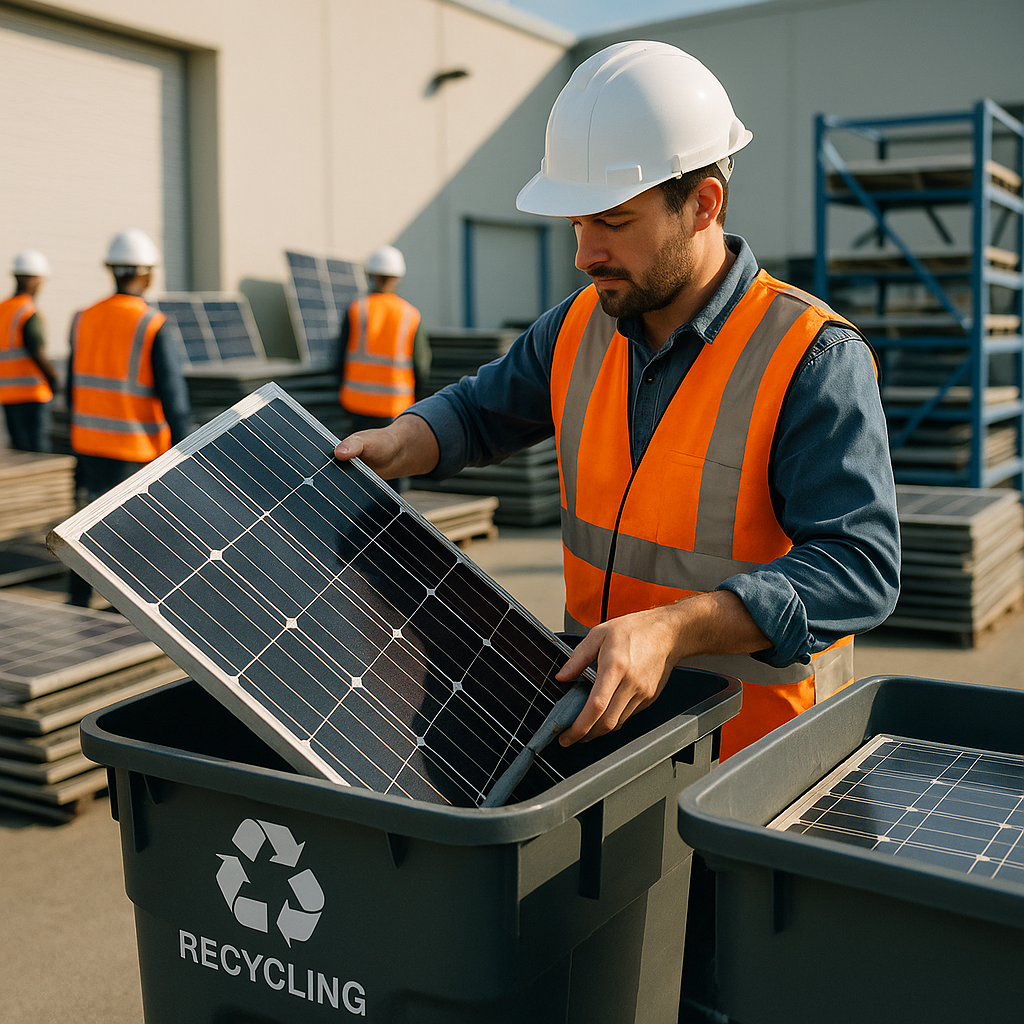
Today, the solar industry faces a major challenge: only 10-14% of decommissioned solar panels are properly recycled. The rest end up in landfills, negating the environmental benefits solar energy should provide. This low recycling rate highlights an urgent need for improved end-of-life management by industry stakeholders.
Beyond waste accumulation, environmental consequences include the leaching of hazardous materials like lead, cadmium, and selenium from solar panels into soil and groundwater. These toxic substances pose significant threats to ecosystems and human health, creating long-term liabilities that contradict solar technology’s clean energy mission.
Certified recycling tackles these issues by adhering to strict environmental standards and accountability measures. Unlike basic methods, certified programs require thorough documentation at each stage of material recovery, ensure hazardous substances are treated appropriately, and allow valuable materials like silicon, silver, and copper to be reused rather than polluting the environment.
For solar companies committed to environmental stewardship, certified recycling aids in achieving critical ESG goals. It reduces waste by diverting thousands of panels from landfills and significantly lowers carbon footprints by reusing energy-intensive materials like silicon and metals, thus minimizing the need for virgin material extraction and processing.
The benefits of a circular economy are further highlighted by industry forecasts. The International Renewable Energy Agency estimates that the cumulative value of recoverable materials from end-of-life panels will reach $450 million by 2030, enough for 60 million new panels, underscoring the economic and environmental advantage of certified recycling.
Certified programs also offer the transparency needed for regulatory compliance by municipalities and sustainability officers. Third-party verification prevents greenwashing and provides solid data for ESG reporting, essential for companies pursuing environmental certifications or meeting investor sustainability criteria.
Another crucial benefit of certified recycling is ecosystem protection. Effective material recovery prevents the land and water contamination seen when panels are discarded in landfills. This aligns with broader environmental stewardship goals and helps solar companies uphold their reputation as responsible clean energy providers.
How Does a Recycling Certificate Bolster ESG Reporting?
Recycling certificates transform general sustainability claims into concrete data points that strengthen ESG reports. These documents provide third-party verified measurements of waste volume, material types, and processing methods. Companies receive detailed documentation showing exactly how much material was diverted from landfills and what happened to each component during recycling.
This level of documentation removes guesswork from environmental reporting. Instead of estimating recycling rates or making broad claims about waste reduction, businesses can present specific metrics supported by independent verification. The certificates include chain-of-custody records tracking materials from collection through final processing.
Third-party verification helps companies avoid greenwashing allegations, which can damage reputation and investor confidence. Stakeholders increasingly scrutinize sustainability claims for accuracy and authenticity. Recycling certificates provide the independent validation that skeptical investors and customers demand when evaluating corporate environmental commitments.
These verified records build trust with diverse stakeholder groups that influence business success. Investors use ESG data to make funding decisions and assess long-term risk. Customers consider environmental performance when choosing suppliers and partners. Regulatory bodies examine waste management practices during compliance audits.
Recycling certificates align with established ESG reporting frameworks guiding corporate disclosure standards. The Global Reporting Initiative (GRI) emphasizes waste management and recycling as key environmental indicators. The Sustainable Accounting Standards Board (SASB) includes material recovery metrics in several industry standards.
Companies integrating certified recycling data into their ESG reports demonstrate measurable progress toward sustainability goals. This documentation supports specific claims about carbon footprint reduction, resource conservation, and circular economy participation. The certificates provide the evidence needed to substantiate environmental achievements in annual sustainability reports and regulatory filings.
What Certifications and Standards Apply to Solar Panel Recyclers?
Solar panel recyclers operate within stringent certification frameworks to ensure quality, safety, and environmental responsibility. The International Organization for Standardization sets the foundation for most recycling operations through comprehensive management systems. These certifications demonstrate a facility’s commitment to professional standards and regulatory compliance.
Leading recycling facilities maintain multiple ISO certifications that cover different operational aspects. ISO 9001 establishes quality management systems that ensure consistent service delivery and customer satisfaction. This certification requires documented processes, regular audits, and continuous improvement practices affecting every stage of the recycling operation.
ISO 14001 focuses specifically on environmental management systems. It requires recyclers to minimize their environmental impact through systematic monitoring, waste reduction, and pollution prevention measures. Facilities must demonstrate ongoing environmental performance improvements and compliance with applicable environmental regulations.
ISO 45001 addresses occupational health and safety management systems. Given the hazardous materials present in solar panels, this certification ensures worker protection through comprehensive safety protocols. Recyclers must implement risk assessment procedures, provide proper training, and maintain emergency response capabilities.
EPA approval is another critical certification layer for solar panel recyclers. The Environmental Protection Agency requires proper registration and permitting for facilities handling potentially hazardous materials. EPA-approved recycling solutions ensure the safe processing of silicon, cadmium-telluride, and other panel types while meeting federal environmental standards.
The Solar Energy Industries Association’s National PV Recycling Program provides industry-specific certification through its network of qualified providers. Founded in 2016, this program connects recycling partners with solar installers, project owners, and developers. Participation requires demonstrating certified services that meet program standards for safety, compliance, and environmental protection.
Additional compliance standards strengthen recycler qualifications beyond basic certifications. The R2:2013 standard provides electronics recycling requirements that many facilities adopt. State-specific permits vary by location but typically include hazardous materials handling authorizations and environmental compliance documentation.
Recycling facilities often maintain multiple certifications simultaneously to meet diverse customer needs. These certification combinations demonstrate comprehensive capabilities in quality management, environmental protection, and worker safety. Certified recycling services ensure businesses that their decommissioned panels receive proper handling while complying with all regulatory requirements.
Conclusion: Leveraging Certified Recycling for Sustainable Leadership
Incorporating certified recycling into a sustainability plan is a strategic move that enhances ESG reporting, builds stakeholder trust, and demonstrates a commitment to the circular economy. By partnering with trusted recyclers who provide detailed documentation, solar companies can ensure transparency, meet environmental responsibilities, and position themselves as leaders in a competitive, eco-conscious industry. The comprehensive recycling data and third-party verification that come with certified programs directly support robust ESG performance metrics while aligning with reporting frameworks like GRI and SASB.
Solar companies adopting certified recycling practices today are building the foundation for long-term success in a sustainability-focused market. These forward-thinking organizations understand that environmental responsibility extends beyond energy generation to include responsible end-of-life management of their equipment.
For expert guidance on implementing certified recycling solutions that strengthen your ESG reporting and demonstrate true environmental leadership, contact Okon Recycling at 214-717-4083.
Send Us a Message
Questions about what we do? Interested in commercial services? Let us know below and a member of our team will get back to you.