5901 Botham Jean Blvd, Dallas, TX 75215

Why Is Degaussing Crucial for Recycling Industrial Magnets?
December 3, 2025Degaussing, or demagnetizing, is the process of eliminating a magnet’s magnetic field by randomly aligning its internal magnetic domains. When magnetic domains inside a magnet become randomly aligned rather than pointing in the same direction, the magnet loses its magnetic properties. For large, powerful industrial magnets, this process is essential for recycling and safe handling.
It prevents interference with electronic equipment, mitigates safety risks from strong attractive forces, and allows for the safe disposal or repurposing of magnetic materials within industrial facilities. Large magnets present unique challenges in demagnetization. Their strong magnetic fields necessitate specialized techniques beyond those used for smaller magnets. Industrial facilities often need to demagnetize large magnets to repurpose equipment, prevent magnetic interference in manufacturing processes, or handle magnetic waste materials safely.
What Are the Main Methods for Demagnetizing Large Magnets?
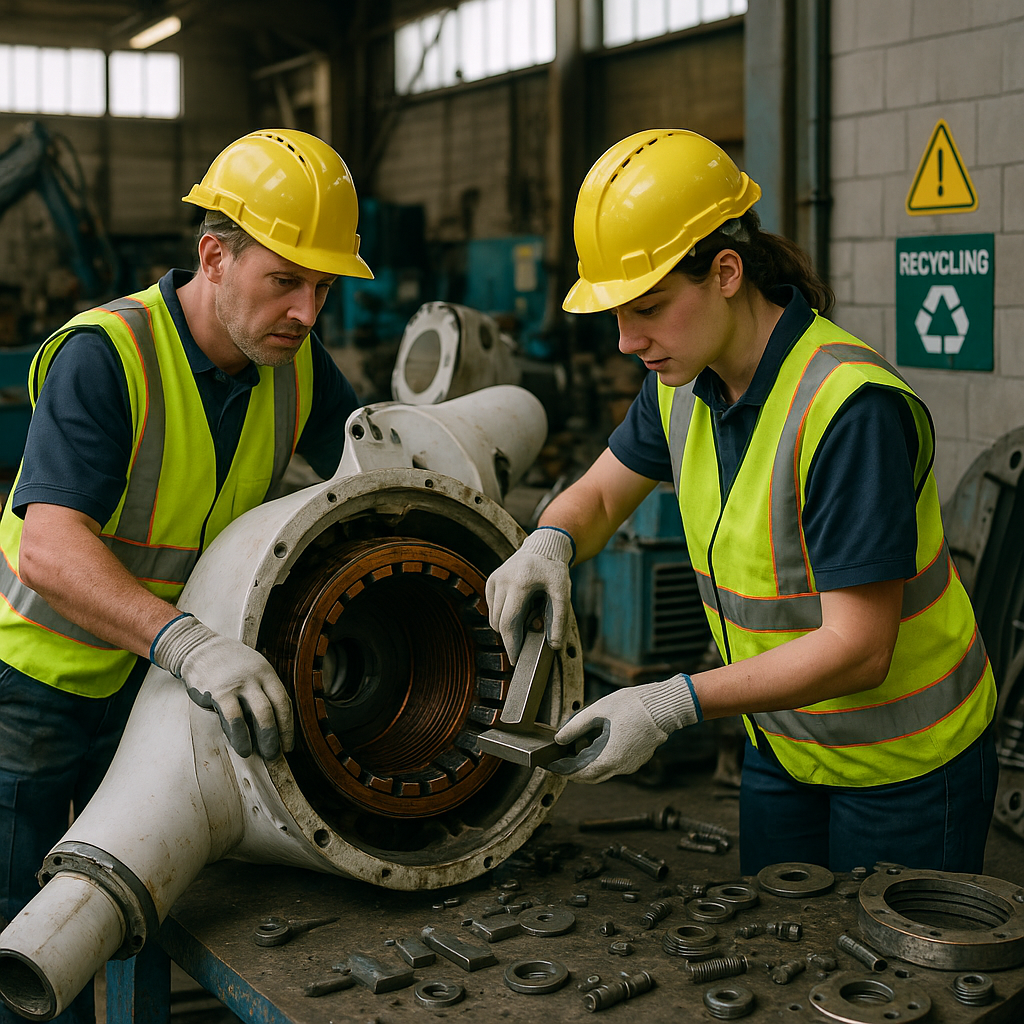
Several methods can effectively demagnetize large magnets by disrupting the alignment of their magnetic domains. Each technique targets the organized structure within ferromagnetic materials that creates persistent magnetic fields. The choice of method depends on magnet size, material composition, and the intended outcome after demagnetization.
Heating Method
Heating a magnet to its Curie temperature represents one of the most reliable demagnetization approaches. This thermal method works by providing enough energy to overcome the forces that maintain domain alignment within the magnetic material. When sufficient heat is applied, atomic vibrations become intense enough to disrupt the organized magnetic structure.
Different magnetic materials require specific temperature thresholds for complete demagnetization. Hard ferrite magnets typically need temperatures above 450°C to lose their magnetic properties entirely. Neodymium magnets, commonly used in industrial applications, begin losing magnetization around 80°C and become completely demagnetized at temperatures between 310-400°C.
This method provides permanent demagnetization but cannot be reversed easily. The heating process may affect material properties and reduce the magnet’s ability to regain original strength if remagnetized later. Controlled furnaces or induction heaters ensure uniform temperature distribution and prevent thermal stress that could crack or damage the magnet.
Alternating Current (AC) Magnetic Field
AC demagnetization uses a fluctuating magnetic field to gradually randomize magnetic domains. The process involves placing the large magnet inside or near a coil carrying alternating current. This creates a magnetic field that rapidly changes direction, causing domains to oscillate back and forth.
The key to successful AC demagnetization lies in the gradual reduction of field amplitude. The alternating field starts at maximum strength, then slowly decreases to zero over time. This controlled decay allows magnetic domains to settle in random orientations, effectively canceling the overall magnetic field.
This technique works particularly well for large objects like motors and generators. The method creates a fine domain structure throughout the material, demagnetizing from the inside outward. AC demagnetization preserves the physical integrity of the magnet while eliminating its magnetic properties.
Using Powerful Electromagnets
Electromagnet-based demagnetization employs strong magnetic fields generated by electrical coils to disrupt domain alignment. This method requires electromagnets capable of producing field strengths that exceed the coercive force of the target magnet. The electromagnet generates an AC current that creates alternating magnetic fields strong enough to reorient magnetic domains.
Field strength requirements vary significantly based on magnet material. AlNiCo magnets can achieve complete demagnetization with field strengths around 350 kA/m. Hard ferrite materials require much stronger fields, often exceeding 800 kA/m for thorough demagnetization.
Modern electromagnet systems can generate these high field strengths through pulse technology. Short-duration, high-intensity pulses provide sufficient energy to penetrate large magnets while preventing equipment overheating. This approach proves especially effective for industrial-scale demagnetization operations.
Reversing the Magnetic Field (Knockdown Demagnetization)
Knockdown demagnetization applies a magnetic field with polarity opposite to the magnet’s original orientation. This reverse field must exceed the magnet’s coercive force to flip domain orientations and reduce overall magnetization. The opposing magnetic field essentially cancels out the existing magnetism when applied correctly.
Success with this method requires precise field measurement and control. The reverse field strength must be carefully calibrated to bring the magnet’s magnetization to near-zero without creating excessive opposing magnetization. Proper implementation can achieve highly accurate demagnetization results.
This technique allows for partial or complete demagnetization depending on application requirements. It proves particularly useful in laboratory settings and precision manufacturing where controlled demagnetization levels are necessary. The method requires specialized equipment and skilled operators to avoid over-demagnetization.
Mechanical Demagnetization
Mechanical methods involve applying physical force through striking, vibration, or impact to disrupt magnetic domain alignment. The mechanical energy disturbs the organized structure within the magnetic material, potentially reducing overall field strength. However, this approach presents significant limitations for large magnets.
Large magnets, especially rare earth types like neodymium, are often brittle and prone to cracking under mechanical stress. The unpredictable nature of mechanical demagnetization makes it unsuitable for applications requiring precise control. Physical damage from impact can compromise both the magnet’s structural integrity and its potential for future use.
While historically used for smaller magnets, mechanical demagnetization is generally avoided in professional and industrial settings. The risk of component damage outweighs the limited demagnetization benefits this method provides for large magnetic materials.
How Does Pulse Demagnetization Improve Efficiency for Large Magnets?
Pulse demagnetization transforms how we handle large magnetic materials in recycling operations by applying controlled, high-strength magnetic pulses that neutralize magnetism efficiently. This advanced technique delivers field strengths between 50-100 kA/m, powerful enough to penetrate materials up to 60mm thick. The process creates complete demagnetization in just 6-20 seconds per cycle, dramatically reducing processing time compared to traditional methods.
The technology works by first generating maximum field strength that aligns all magnetic domains within the material, including those deep inside large components. After reaching peak intensity, the system applies a precisely controlled, monotonically decreasing alternating field. This controlled decay ensures random distribution of magnetic domains throughout the entire component, achieving thorough demagnetization from the inside out.
Technical Process and Field Control
Think of pulse demagnetization like calming a crowded room. First, you get everyone’s attention with a loud sound, representing the maximum field strength that organizes all magnetic domains. Then you gradually lower your voice in a consistent pattern until silence is achieved, mirroring how the decreasing alternating field randomizes the magnetic domains.
The Maurer Degaussing® technology enhances this process through Constant Field Technology (CFT®), which maintains consistent field strength regardless of coil fullness or component size. For large magnets and assemblies, we operate at lower frequencies between 1-8 Hz, allowing better penetration depth to ensure the magnetic field reaches the core of substantial objects. This slower frequency approach proves essential for processing bulky materials that require deep field penetration.
Field symmetry during the discharge phase prevents residual magnetism that could compromise the demagnetization results. Advanced systems shield components from external magnetic fields, particularly Earth’s magnetic field, which becomes critical when processing long components or bulk materials. Small symmetrical deviations between magnetic poles can cause residual magnetism, making precise field control essential for complete demagnetization.
Operational Advantages for Large-Scale Processing
One significant efficiency gain comes from demagnetizing assembled components without disassembly. We can process cutting dies without dismantling them, preserving precise settings while saving considerable time. Large washing baskets filled with bulk materials can be demagnetized in seconds, drastically improving productivity compared to conventional methods that require component separation.
The technology addresses a common inefficiency in traditional systems that consume significant reactive power. Maurer Degaussing® procedures compensate for this reactive power and convert most energy into active power, resulting in much higher efficiency. This energy optimization reduces operational costs while maintaining superior demagnetization performance.
Processing times for large objects demonstrate remarkable efficiency improvements. Construction pipes measuring 2,500mm diameter by 7,000mm length can be demagnetized using systematic pulse application across surface areas. Each pulse covers approximately one square meter, with the coil remaining stationary during the 6-20 second pulse duration before moving to the next position.
For exceptionally large or bulky objects, specialized universal pulses with wide frequency bands accommodate diverse industrial applications. This flexibility allows us to process various magnetic components efficiently, from assembled machinery to bulk scrap materials. The ability to handle assembled components without disassembly represents a major productivity advancement in magnetic materials processing.
Quality and Reliability Benefits
Pulse demagnetization provides zero-error reliability since pulse sequences can be monitored for specified properties. When component positioning remains consistent, we achieve optimum demagnetization results with predictable outcomes. This reliability proves crucial for industrial applications where consistent magnetic neutralization is essential for downstream processes.
The high field strengths generated through pulse technology guarantee complete demagnetization even inside thick materials when configured correctly. Unlike cyclical methods limited by heat buildup, pulse systems deliver maximum current for only fractions of seconds, preventing coil overheating. This thermal management allows much higher magnetic field strengths, ensuring thorough magnetic neutralization throughout large components.
What Safety Precautions Should Be Taken When Demagnetizing Large Magnets?
Demagnetizing large magnets, particularly powerful neodymium magnets, requires strict safety protocols to prevent injuries and equipment damage. These strong magnets can cause serious harm if mishandled during the demagnetization process.
Personal protective equipment is essential when working with large magnets. Always wear safety glasses to protect your eyes from potential shards if a magnet shatters. Heavy-duty protective gloves are also necessary to prevent pinching injuries, as the strong attractive forces can easily trap fingers and cause severe contusions or even broken bones.
Essential Safety Gear and Preparation
Before beginning any demagnetization procedure, proper preparation is critical. Remove all metal objects from your pockets including keys, coins, and pocket knives. Keep electronic devices like smartphones, credit cards, and medical devices at a safe distance, as strong magnetic fields can damage them or cause malfunctions.
- Always wear safety glasses to protect against potential flying fragments
- Use heavy-duty protective gloves to prevent pinching injuries
- Empty pockets of all metal items before handling magnets
- Keep electronic devices and magnetic media at least several feet away
- Work on a non-magnetic surface (wood or plastic) without steel components
Proper Handling Techniques
When handling large magnets for demagnetization, never allow them to slam together. The brittle nature of neodymium magnets means they can shatter upon impact, sending sharp metal fragments flying at high speeds. Use non-metallic tools like plastic wedges to separate magnets instead of using your hands.
Maintain safe distances between individual magnets to prevent sudden collisions. Store large magnets at least one meter away from your body, and separate them with pieces of cardboard when not in use.
Demagnetization Process Safety
The demagnetization process itself presents several unique hazards. When using thermal demagnetization methods, be aware that neodymium magnets can lose their magnetic properties at high temperatures (above 175°F or 80°C) but may also catch fire and produce toxic fumes at excessive temperatures.
For large magnets, the most effective demagnetization often uses specialized equipment that generates high-intensity sine pulse demagnetization. This equipment should be operated with caution as it creates strong magnetic fields and requires significant electrical power.
- Ensure proper ventilation when using thermal demagnetization methods
- Maintain a clear working area with no bystanders during the process
- Follow equipment manufacturer guidelines for power requirements
- Use specialized equipment with appropriate pulse parameters (5-20Hz frequency)
- Allow sufficient cooling time after thermal demagnetization before handling
For very large or industrial-scale magnets, professional assistance is strongly recommended. Specialized demagnetization services have the proper equipment and expertise to safely handle powerful magnets without risking injury or property damage.
Environmental Considerations
Proper disposal is an important safety consideration when demagnetizing large magnets. Neodymium magnets should be placed in steel containers before disposal to prevent them from attracting waste disposal equipment. All strong permanent magnets should undergo thermal demagnetization before disposal.
When possible, recycle neodymium magnets through facilities that specialize in rare earth materials. This reduces environmental impact and conserves valuable resources.
By following these comprehensive safety protocols, the risks associated with demagnetizing large magnets can be significantly reduced. The process requires patience, proper equipment, and careful attention to detail to ensure both personal safety and successful demagnetization.
Conclusion: Selecting the Right Approach for Demagnetization and Recycling

Choosing the correct method for degaussing an industrial magnet depends on its material composition, size, and intended use. While simple methods work for smaller magnets, large-scale industrial applications require specialized equipment like high-intensity pulse demagnetization systems to ensure safety and effectiveness. The selection process must consider factors such as the magnet’s coercive force, whether physical integrity needs preservation, and the scale of operations required.
Proper demagnetization serves as a foundational step for safely handling, recycling, and recovering valuable rare earth materials from powerful magnets. This process enables facilities to extract critical resources while maintaining strict safety protocols throughout materials recovery operations. For comprehensive degaussing systems and sustainable magnet recycling solutions tailored to your industrial needs, contact Okon Recycling at 214-717-4083.
Send Us a Message
Questions about what we do? Interested in commercial services? Let us know below and a member of our team will get back to you.