5901 Botham Jean Blvd, Dallas, TX 75215
Alnico Magnet Scrap Prices: How Preparation Affects Value and Market Stability
December 4, 2025Alnico magnet scrap prices currently range from $0.75 to $2.00 per pound, depending on material grade and preparation quality. This pricing reflects the substantial cobalt and nickel content that makes these magnets economically valuable for recovery operations. The wide price range exists because material condition and processing requirements directly impact what recycling facilities can offer.
Understanding Alnico magnet scrap prices involves recognizing their place within the broader magnetic materials market. While the overall magnet recycling market is volatile, Alnico magnets provide a steady but modest contribution to recycling revenues. Their value is distinct from rare earth magnets like neodymium, which command much higher prices due to their applications in electronics and green technology.
The magnetic materials market has shown strong growth, expanding from $7 billion in 2010 to a projected $15 billion by 2020. However, this growth comes with significant market volatility that affects all magnetic material recycling. Neodymium prices, for example, soared to $450 per kilogram in 2011 before dropping to less than half that value just one year later. Alnico magnets offer more stable pricing compared to these dramatic fluctuations in the rare earth sector.
What are the Current Scrap Prices for Alnico Magnets?
Current Alnico magnet scrap prices vary significantly depending on the buyer and material quality. Based on listings from different recycling yards, prices range from approximately $0.75 per pound to between $1.50 and $2.00 per pound. These prices reflect the substantial variation in how different recycling facilities evaluate and process these materials.
The price difference occurs because scrap metal value depends heavily on material preparation and processing requirements. Higher-grade materials that have been properly sorted and analyzed command premium pricing in the current market. Contaminated or unsorted materials typically receive lower valuations due to additional processing costs that recycling yards must absorb.
Several factors directly impact the final scrap value buyers offer for Alnico magnets. Material composition plays a primary role, as different Alnico grades contain varying percentages of aluminum, nickel, and cobalt. The substantial cobalt and nickel content makes these magnets economically attractive for recovery operations, but buyers must verify composition through analysis before offering top prices.
Material preparation requirements significantly influence pricing structures across recycling yards. Clean materials free from attachments, adhesives, and contamination receive the highest valuations from scrap metal buyers. Magnets with steel attachments, coatings, or other foreign materials require additional processing steps, reducing their overall market value.
Market conditions significantly affect Alnico magnet pricing in the recycling industry. Cobalt and nickel prices remain elevated due to strong demand from battery manufacturing and aerospace applications. This demand supports stable pricing structures for properly prepared Alnico materials, even as broader scrap metal markets experience volatility.
Regional variations also impact pricing, with different recycling yards offering different rates based on their processing capabilities and buyer relationships. Some facilities specialize in rare earth metals processing and can offer higher prices, while others treat Alnico magnets as specialty materials requiring external processing. Size and quantity influence pricing as well, with larger volumes often receiving better rates from scrap processors.
How do Alnico Magnet Prices Compare to Other Magnet Types?
Alnico magnets are valued significantly lower than rare earth magnets across both new and recycled markets. Alnico scrap typically trades at approximately $0.75 per pound. This contrasts sharply with rare earth elements like neodymium, which have reached prices as high as $450 per kilogram in recent market cycles.
The price disparity becomes even more pronounced when examining finished magnet products. A typical neodymium disc magnet costs between $0.10 and $10 depending on size and grade. Meanwhile, a block samarium cobalt magnet can range from $1 to $100 or more per unit. Alnico magnets generally fall below these price ranges for comparable sizes and applications.
Raw material costs drive much of this price difference between magnet types. Neodymium magnets require rare earth elements that account for approximately 80% of their total manufacturing cost. Current global neodymium prices hover around $68.05 per kilogram, forming the foundation for additional processing expenses. Alnico magnets, composed primarily of aluminum, nickel, and cobalt, rely on more abundant and stable-priced materials.
Manufacturing complexity also influences these price fluctuations across magnet categories. Rare earth magnets require specialized sintering processes and precise temperature control during production. The sintering process for high-performance magnetic technology demands sophisticated equipment and higher energy consumption. Alnico magnets can be produced through both casting and sintering methods, with casting often being more cost-effective for larger quantities.
Market demand from high-performance magnetic technology sectors significantly impacts pricing dynamics. Electronics manufacturers, electric vehicle producers, and renewable energy companies drive substantial demand for rare earth magnets. This demand from green technology applications creates sustained upward pressure on neodymium and samarium cobalt prices. Alnico magnets serve more specialized markets, resulting in steadier but generally lower pricing structures.
Recycling economics further highlight these price differences between magnet types. Facilities processing magnetic materials find greater value recovery potential in rare earth magnet streams. The concentrated rare earth content makes these materials attractive for materials recovery operations. Alnico magnets, while still valuable for recycling, generate lower per-pound returns due to their more common constituent elements.
Are There Specific Requirements for Selling Alnico Magnet Scrap?
Alnico magnet scrap sales involve specific material preparation and quality standards that buyers strictly enforce. Most recycling facilities require comprehensive material analysis before accepting any Alnico scrap shipments. This analysis verifies the magnet composition and confirms the presence of valuable metals like aluminum, nickel, and cobalt that justify the recycling process.
The analyzed material must be completely free of attachments. Any adhesives, mounting hardware, or coating materials can contaminate the recycling stream and reduce the material’s value. Buyers typically reject loads that contain excessive glue residue or foreign materials that interfere with the reprocessing methods.
Market Limitations and Buyer Selectivity
Not all recycling facilities accept Alnico magnets for processing. Many scrap yards specialize in more common magnetic materials and lack the equipment or expertise needed for Alnico recovery. Some facilities focus exclusively on NdFeB magnets or SmCo magnets due to higher volume demands and established processing systems.
The specialized nature of Alnico recycling means sellers must identify qualified buyers before collecting material. Standard scrap metal dealers often cannot process these magnets effectively. The limited buyer network can affect pricing and pickup scheduling for larger quantities.
Contamination and Quality Standards
Material quality directly impacts buyer acceptance and pricing structures. Magnets that show excessive oxidation or environmental damage may not meet reprocessing standards. Contamination from unknown additives or dopants used by different manufacturers complicates the recycling process significantly.
Bulk quantities typically receive better pricing than small shipments. Buyers prefer consistent material sources with known composition histories. According to industry pricing data, current market rates reflect these quality requirements and processing complexities that recyclers face when handling Alnico magnet scrap.
Conclusion: Navigating the Alnico Scrap Market
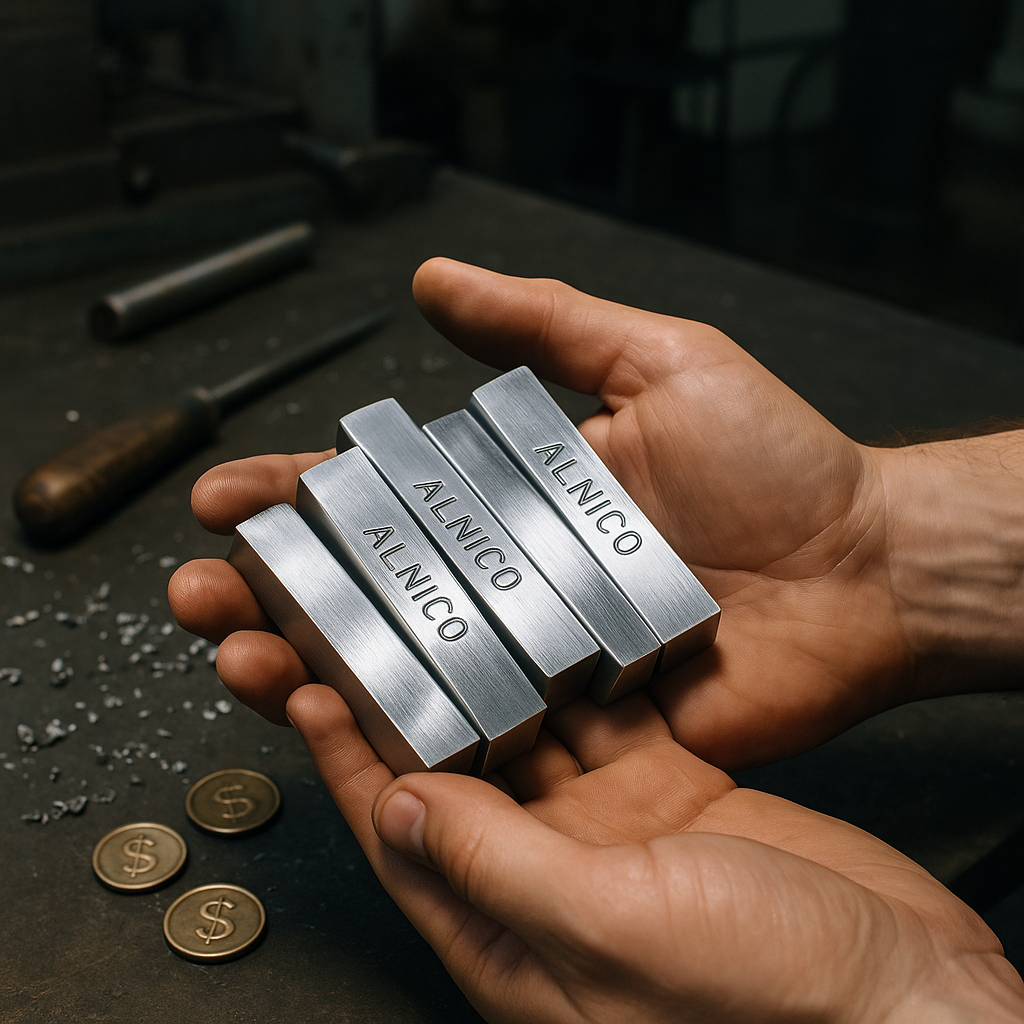
Freshly processed Alnico metal pieces held in hands, showcasing craftsmanship under bright workshop lights with coins in view.
Alnico magnet scrap prices typically fall within the $0.75 to $2.00 per pound range. This makes them a modest but stable asset in the volatile magnet recycling market. The significant price variation depends on material quality and preparation. Clean, properly sorted materials command premium pricing up to $2.00 per pound. Contaminated or unsorted scrap receives lower valuations around $0.75 per pound.
Success in the Alnico scrap market requires proper preparation and finding specialized buyers. Materials must be free of steel attachments, housings, and other contaminants. Working with experienced recycling facilities that understand rare earth metals ensures fair pricing for your scrap material. Contact Okon Recycling at 214-717-4083 for professional Alnico magnet recycling services and competitive market value pricing.
Send Us a Message
Questions about what we do? Interested in commercial services? Let us know below and a member of our team will get back to you.