5901 Botham Jean Blvd, Dallas, TX 75215
What Is Heavy Equipment Undercarriage Recycling?
December 15, 2025Did you know that the construction industry in the United States generates over 100 million tons of equipment waste each year? This staggering amount presents a significant opportunity for resource recovery and environmental stewardship.
Heavy equipment undercarriage recycling systematically dismantles and recovers valuable materials from the track systems, drive components, and structural elements of machinery that has reached its end of life. When excavators, bulldozers, and other heavy machinery can no longer perform their intended functions, the undercarriage components contain significant amounts of high-grade steel, hydraulic fluids, rubber compounds, and electronic systems that retain substantial value. Rather than allowing this equipment to accumulate in storage yards or contribute to landfill waste, we can extract these materials through specialized recycling processes.
This recycling process transforms what many consider scrap machinery into valuable commodities for manufacturing new products.
How Is Heavy Equipment Used in the Recycling Workflow?
Heavy equipment is essential in modern recycling operations. These machines manage substantial volumes of materials daily, converting waste streams into valuable resources through systematic processing stages.
Collection and Transportation Operations
Recycling starts with specialized collection equipment designed to handle various material types. Large trucks with hydraulic systems transport recyclable materials from collection points to processing facilities. These vehicles feature reinforced beds and lifting mechanisms accommodating everything from household recyclables to industrial scrap.
Front-end loaders are critical during the initial material handling phase. They use hydraulic arms and bucket attachments to move large quantities of mixed recyclables from collection vehicles into sorting areas. Metal recycling plants utilize machinery like excavators, cranes, and conveyor systems to organize materials efficiently.
Excavators with specialized grabber claws complement front-end loaders in positioning tasks, relocating substantial volumes of recyclables throughout facilities for optimal workflow.
Sorting and Separation Systems
Advanced sorting machinery organizes mixed waste streams into material categories. Conveyor belts transport materials through multiple stations where separation technologies identify and extract specific materials, reducing manual labor and improving accuracy.
These sorting machines use various technologies including optical scanners, density separators, and magnetic systems. Magnetic separators automatically extract ferrous metals using powerful electromagnets. Eddy current separators handle non-ferrous metals like aluminum and copper.
| Workflow Stage | Equipment Types |
|---|---|
| Collection and Transportation | Hydraulic trucks, Front-end loaders, Excavators, Cranes |
| Sorting and Separation | Optical scanners, Density separators, Magnetic systems |
| Processing and Preparation | Balers, Shredders, Compactors |
| Final Processing and Distribution | Granulators, Material handlers, Conveyor networks, Pneumatic transfer systems |
Optical sorting systems represent the most advanced technology in modern recycling facilities. They use sophisticated sensors and robotic arms to identify different materials based on color, composition, and physical properties. Air classifiers help remove lightweight contaminants, improving material purity.
Processing and Preparation Equipment
Balers compact sorted materials into dense bales, optimizing storage and transport efficiency. These hydraulic machines apply pressure to materials like cardboard, plastic, and aluminum, creating packages that maintain shape during handling.
Industrial shredders reduce oversized materials to manageable pieces. Dual-shaft shredders handle mixed waste and bulky items that might jam single-shaft machines. These systems process materials ranging from appliances to construction debris with minimal maintenance.
Compactors reduce material volume and prepare items for further processing. Landfill compactors for recycling applications have reinforced components to withstand debris and chemicals while maintaining reliability.
Final Processing and Distribution
Specialized equipment prepares materials for final transformation into products. Granulators, combined with shredders, achieve precise particle sizes required by manufacturing specifications. They operate at higher speeds, producing uniform output for applications like plastic recycling.
Material handlers with various attachments manage loading and unloading of processed materials, moving finished products to storage and loading docks. Hydraulic systems provide precise control to handle delicate materials.
Conveyor networks automate material transport between processing stages, reducing manual handling and maintaining consistent flow rates. Pneumatic transfer systems transport lighter materials through pipes, preventing loss and contamination during transport to packaging or shipping areas.
What Are the Options for Disposing of Old Heavy Machinery?
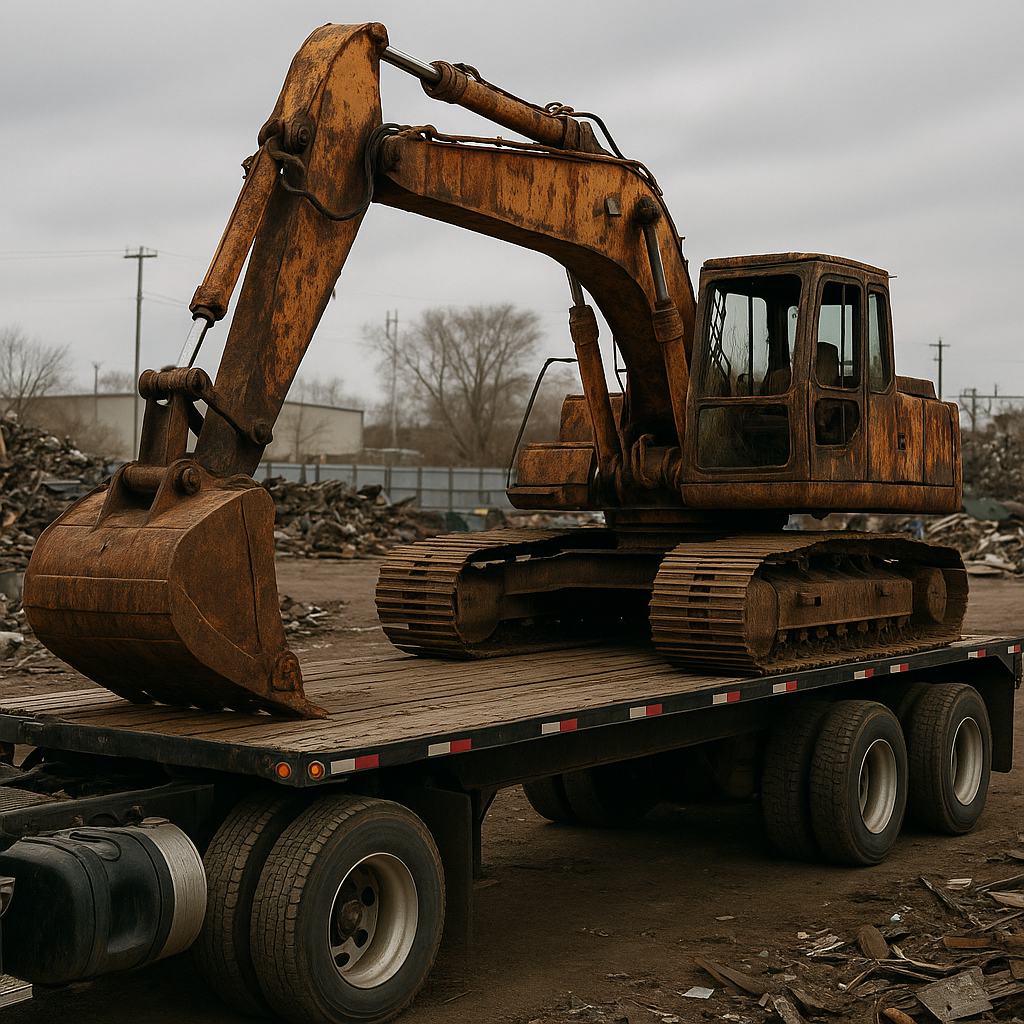
Scrapping is the most environmentally responsible option when heavy machinery reaches its end of life. Scrap yards and recycling centers accept industrial equipment, dismantling it to recover valuable metals like steel, aluminum, copper, and brass. This process diverts materials from landfills while providing modest returns to equipment owners.
The scrapping process often involves mechanical breakdown using shredders or manual dismantling followed by smelting. Facilities recover valuable non-ferrous metals using simple magnet tests. Ferrous metals like steel and iron attract magnets but fetch lower prices, while non-ferrous metals such as copper and aluminum are non-magnetic and offer higher scrap values.
Direct selling offers the highest potential returns but requires significant time from equipment owners. This involves independently marketing machinery, handling buyer inquiries, and managing transaction paperwork without intermediary fees. The process may take several months, as buyers for expensive industrial equipment are limited to specific geographic regions.
Successful direct sales require comprehensive documentation, including maintenance records, operational history, and clear ownership titles. Industry best practices recommend detailed photography and transparent condition assessments to build buyer confidence and expedite transactions.
Machinery brokers offer specialized knowledge and established buyer networks in exchange for service fees usually ranging from five to twelve percent of sale prices. They handle equipment valuation, marketing, negotiations, and logistics, providing sellers with peace of mind through expertise and industry connections.
Brokers maintain extensive databases of potential buyers and understand current market conditions for specific equipment types. Their services are particularly valuable for specialized machinery or when sellers lack time to manage direct sales independently.
Auctioning through established platforms provides access to a broader audience and competitive bidding environments. Reserve and non-reserve formats allow owners to set minimum acceptable prices or accept the highest bids. Online platforms have extended reach beyond traditional physical events.
Recent auction data shows increasing values for used construction equipment, with average dozers experiencing up to a twenty percent value increase year over year. Auction houses report strong demand from both domestic and international buyers, creating favorable conditions for equipment disposal.
Trade-in arrangements with equipment dealers simplify the disposal process by applying machinery values toward new equipment purchases. Dealers assess equipment based on appearance, mechanical condition, age, operational hours, and maintenance history to determine trade-in values. This approach reduces out-of-pocket costs for replacement equipment while eliminating marketing and transportation responsibilities.
Donating machinery to eligible organizations provides tax advantages while supporting worthy causes. General-purpose equipment is more widely accepted by charitable organizations than highly specialized machinery. Donations to qualified nonprofits or educational institutions can qualify as tax-deductible contributions, providing financial benefits to equipment owners.
Historical preservation organizations accept antique machinery for museum displays and educational purposes. These donations support construction industry heritage and may qualify for significant tax deductions based on equipment appraisals.
What Specialized Equipment Is Essential for Scrap Recycling Operations?
Material handlers form the backbone of efficient scrap recycling operations. Purpose-built material handlers offer extended reach capabilities, with advanced models achieving over 50 feet of reach. These machines feature multiple power modes that optimize performance and fuel consumption, enabling facilities to process thousands of tons monthly.
High-capacity material handlers can extend reach capabilities to nearly 60 feet while reducing operating costs by up to 20%. Their reinforced structures and electrically driven fans allow for efficient high-volume processing in demanding scrap yard environments.
These purpose-built machines feature specialized cabs with impact-resistant shields and skylights to protect operators from falling debris. Auto-reversing fans prevent airborne particles from clogging cooling systems, while specialized guarding secures cylinders and tracks from worksite hazards. The elevated cab design enhances visibility across sprawling scrap yards during sorting and stockpiling operations.
Wheel Loaders and Mobile Equipment
Wheel loaders equipped with scrap handling packages excel at high-volume loading and feeding operations. Multiple models are specifically configured for scrap recycling work, capable of handling loose scrap materials, sorting different metal types, and feeding shredders consistently throughout daily operations.
The robust design of these wheel loaders withstands the demanding conditions of scrap yards. Their powerful hydraulic systems and precision handling capabilities make them ideal for moving materials between processing stations and loading finished products onto transport vehicles.
Critical Attachments for Material Processing
Orange peel grapples are essential attachments for penetrating dense scrap piles effectively. These hydraulically-controlled tools have either four or five tines designed to grab and move more material per pass. The self-contained hydraulic systems eliminate external return hoses, reducing damage risks and maintenance downtime in harsh scrap handling environments.
Heavy-duty shears provide the cutting power needed for processing tough materials. Available in various sizes and rotation configurations for both boom-mount and stick-mount applications, professional-grade shears deliver significant over-stress margins and reduce service time substantially. Productivity improvements of up to 75% make them valuable investments for operations requiring precise material sizing.
| Equipment Category | Typical Operating Weight Range | Maximum Reach Capabilities | Key Features |
|---|---|---|---|
| Light Material Handlers | 30-40 tons | 35-40 feet | Compact design, versatile applications |
| Medium Material Handlers | 45-55 tons | 45-52 feet | Balanced performance, fuel efficiency |
| Heavy Material Handlers | 60-70 tons | 55-60 feet | Maximum reach, high-volume processing |
Supporting Equipment and Safety Systems
Excavators and skid steer loaders complete the essential equipment fleet for comprehensive scrap processing. These machines handle sorting tasks, site preparation, and material transport functions that keep operations flowing smoothly. Their versatility allows facilities to adapt quickly to changing material types and processing requirements.
Purpose-built generators power magnetic attachments and other electrical systems without interrupting operations. Easy-to-use controls enable operators to switch magnet current on and off without causing material drops. This integrated power approach reduces dependency on external electrical sources and maintains productivity during extended operating periods.
Why Is Recycling Heavy Construction and Demolition Waste Beneficial?
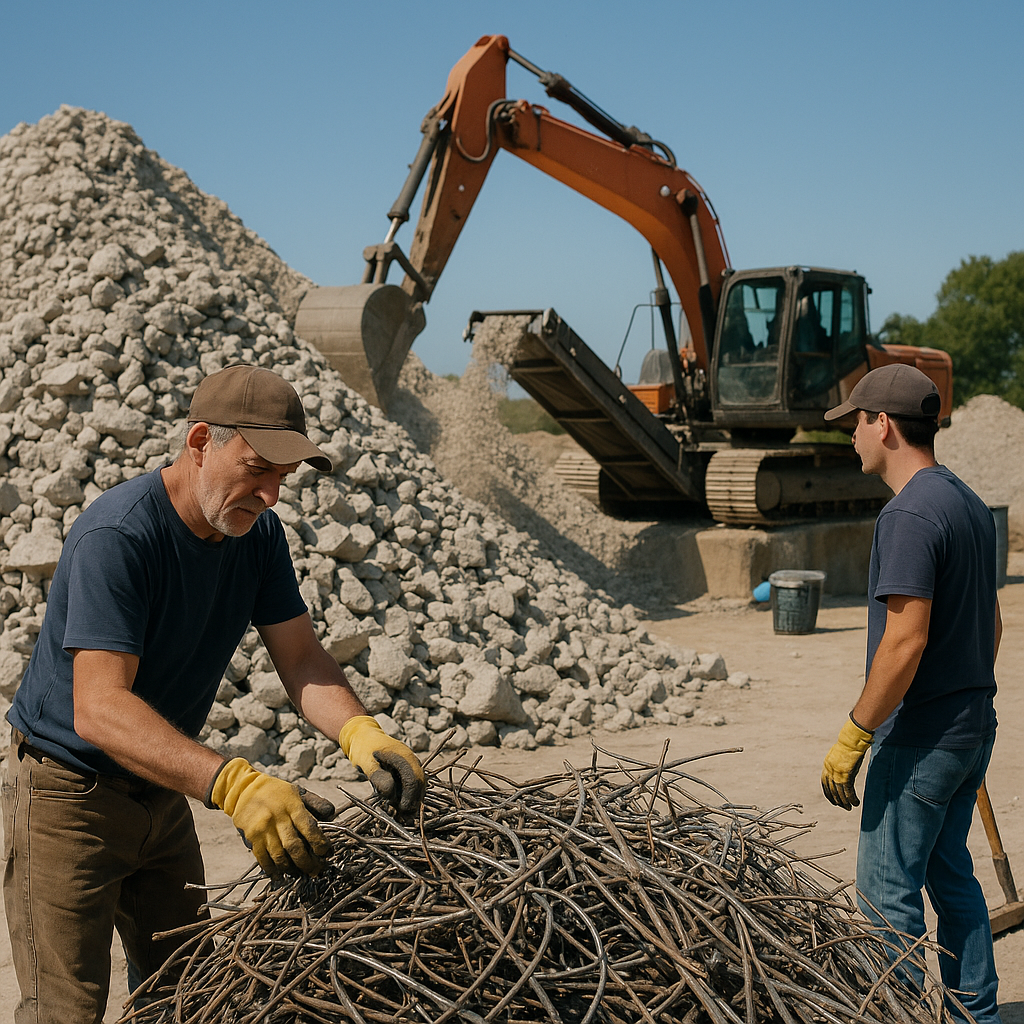
Recycling heavy construction and demolition waste offers substantial financial and environmental benefits. These advantages extend beyond basic waste disposal, adding measurable value for construction companies and their projects.
Cost Reduction Through Material Recovery
One of the most direct economic benefits is avoiding the high costs of purchasing new materials. Construction companies can salvage materials like steel beams, concrete blocks, and bricks from demolition sites. These can be reused in new projects or sold to other contractors.
The cost savings are particularly significant in large-scale projects where raw materials represent a substantial part of the budget. By recovering and processing materials on-site, projects can reduce procurement costs while generating additional revenue from salvaged components.
Disposal fees for construction waste continue to rise as landfill space becomes scarce. Processing materials for reuse eliminates these disposal costs entirely. Savings from avoiding landfill fees often justify the investment in on-site recycling equipment.
Transportation and Operational Efficiency
On-site processing significantly reduces transportation costs and associated emissions. Moving heavy materials like concrete and steel from construction sites requires specialized equipment and multiple truckloads, adding substantial expense to project budgets.
Processing waste on-site also reduces safety risks linked to moving bulky items. Fewer truck movements mean less traffic congestion around work sites and reduced accident potential. Project schedules become more predictable when material handling is managed locally rather than coordinated with external facilities.
Logistics are simplified when materials stay within project boundaries. Construction teams can immediately reuse processed materials, avoiding delivery schedules and supply chain disruptions.
Environmental Impact and Resource Conservation
Heavy construction materials consume significant energy during production. Recycling steel saves up to 75% of the energy compared to creating new steel from iron ore. This energy reduction leads to lower carbon emissions and reduced environmental impact.
Recycling construction waste helps preserve natural resources like timber, sand, and gravel. Each ton of recycled material lessens the need to extract virgin resources. This conservation is increasingly important as easily accessible natural resources are depleted.
Landfill space conservation is another critical environmental benefit. Construction and demolition waste accounts for approximately 25-30% of all solid waste generated annually. Diverting this material from landfills helps extend the lifespan of existing disposal facilities and reduces the need for new landfill development.
Value Creation Through Material Processing
Heavy construction waste transforms into valuable raw materials through proper processing. Concrete can be crushed into aggregate for new concrete production or road base material. Steel components can be melted down and reformed into new structural elements.
These processed materials often meet or exceed the quality standards of virgin materials. Recycled concrete aggregates perform similarly to newly quarried stone in most applications. The processed materials command market prices that reflect their utility in new construction projects.
The circular economy model emerges when construction projects consistently reuse materials rather than disposing of them. This approach creates local material supply chains that reduce dependence on distant suppliers and volatile commodity markets.
Conclusion: The Value of a Strategic Recycling Process
Properly managing heavy equipment undercarriage recycling is essential for both environmental sustainability and business profitability. Whether selecting the right disposal method or using specialized machinery for processing, a well-planned approach ensures that old equipment is diverted from landfills and its materials are transformed into valuable resources. Strategic scrap management reduces disposal costs while recovering materials like steel, aluminum, and copper. This efficient processing approach helps companies lower their carbon footprint, conserve natural resources, and improve operational efficiency through waste reduction.
The future of heavy equipment operations relies on adopting sustainable end-of-life equipment management practices. Companies implementing comprehensive recycling strategies today position themselves for long-term success through regulatory compliance, cost savings, and enhanced reputations. For expert guidance on developing an effective heavy equipment recycling program, contact Okon Recycling at 214-717-4083.
Send Us a Message
Questions about what we do? Interested in commercial services? Let us know below and a member of our team will get back to you.